
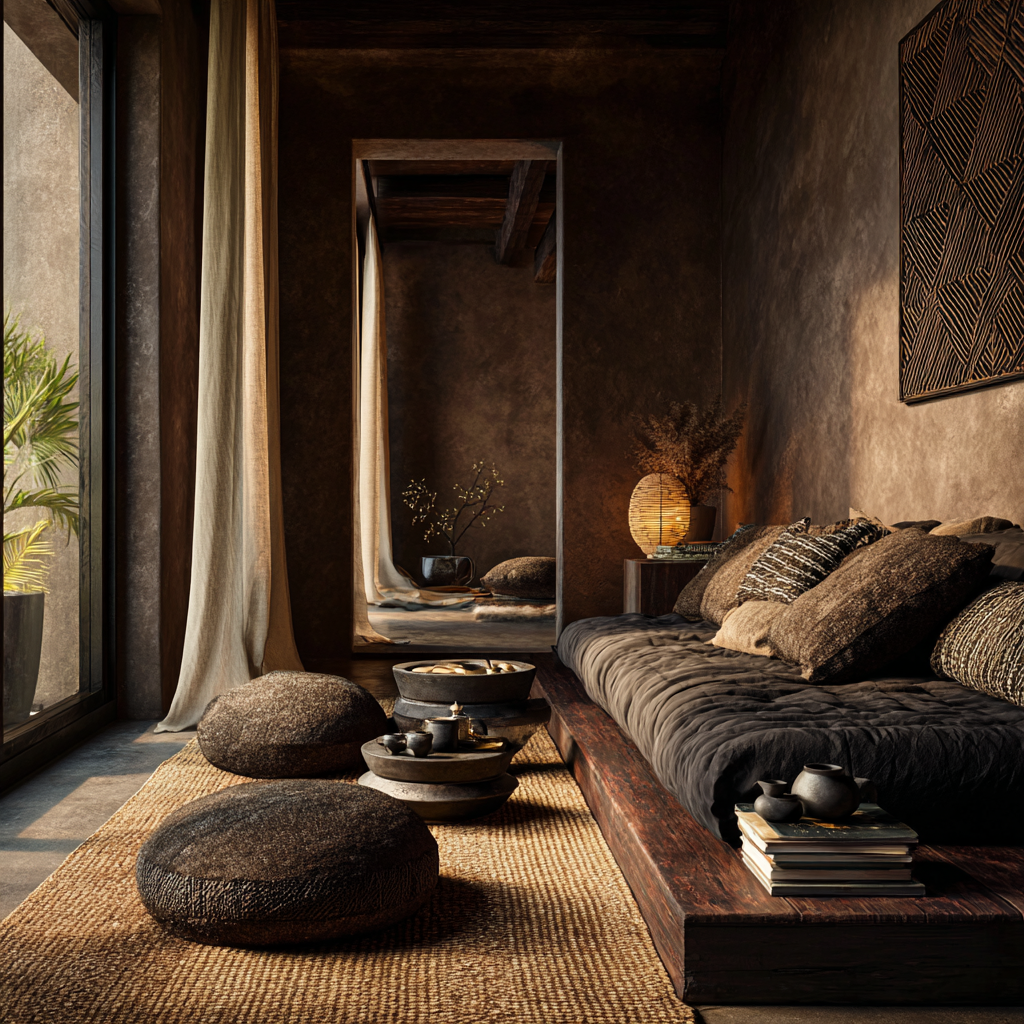
Chakra Healing Benefits Of Deep Brown
Deep brown often gets overlooked in conversations about chakra healing, but for me, it’s one of the most centering colors around. This shade reminds me of stone, soil, and tree bark—elements that ground life. If you ever feel like you’re drifting, out of touch, or super stressed, working with deep brown for chakra healing can help bring you right back down to earth. I wrote this guide to talk you through what deep brown does in chakra healing, and how you can welcome its benefits into your well-being routine.

Understanding Deep Brown in Chakra Healing
Deep brown is all about support, protection, and belonging. In the chakra system, each color matches up with a different energy center, and deep brown’s role is to stabilize. This color doesn’t demand attention. Instead, it quietly reminds your body that you’re safe in the world. I’ve felt this firsthand whenever life feels too chaotic or unsteady. Sometimes, sitting with deep brown objects or imagining this color helps me feel steady again.
Unlike colors that spark quick action or excitement, deep brown soothes with its subtlety. It brings to mind wooded trails, old tree trunks, and the weight of stones in your hand. In my experience, the presence of deep brown creates an atmosphere where tension melts away bit by bit. That’s part of why I keep brown stones and wooden figures nearby when I meditate or unwind.
Root Chakra Connection: Building Stability and Security
Most of the benefits of deep brown show up when working with the Root Chakra, also called Muladhara. This chakra sits at the base of your spine and supports everything about feeling safe, rooted, and supported in daily life. When I work with deep brown stones or even just wear deep brown clothing, I notice a stronger sense of being anchored. Here’s what this color can do for your root chakra health:
- Brings a grounded state of mind: I find it easier to focus and stay present.
- Soothes anxiety and financial fear: Experiencing stress about money or security can make anyone feel scattered. Deep brown encourages trust that things will settle.
- Helps the body recover from overwhelm: When emotions or overstimulation leave me frazzled, visualizing brown brings a sense of calm.
- Grows trust in your environment: I feel more at home in my body and in my surroundings.
Every time I use deep brown for root chakra healing, it’s like I can finally land in my own body after a day of distractions and worry.
Many traditions see brown as a symbol of home, hearth, or familiar places. By making deep brown a part of daily routines—like wrapping up in a brown blanket or sipping tea from a brown mug—I help build a natural sense of security in my environment, even if everything around me is changing.
How Deep Brown Calms Your Nervous System
What stands out about deep brown is how it interacts with the nervous system. This connection is gentle and steady. I’ve noticed that subtle exposure to this color (through nature, stones, or home decor) helps me wind down after a stressful day. Here’s how it supports nervous system health:
- Signals the body to relax: My breath slows, and I’m reminded to rest.
- Helps with chronic stress: During times of burnout or fatigue, deep brown’s stabilizing energy breaks the cycle of stress.
- Reduces keeping an eye out mode: If I’m feeling jumpy or always on alert, grounding with brown creates a sense of internal security.
- Supports gentle trauma healing: For anyone working through big emotional wounds, a slow approach to feeling safe is really important. Deep brown provides that gentle foundation.
This approach has proven valuable not just for me but for friends dealing with anxiety or trauma symptoms. When everything else feels too intense, brown meets you exactly where you are.
You can even create a “safety signal” by choosing a particular brown item—maybe a smooth stone, a wooden bracelet, or a favorite sweater—that tells your mind it’s time to relax. Over time, your nervous system picks up on that cue and shifts you into a more restful state with less effort.
Embodiment and Physical Presence: Making the Body Home Again
Intellectualizing, daydreaming, or getting lost in worries can pull consciousness out of your body. I’ve gone through phases where I lived entirely in my head. Deep brown helps me remember what it’s like to come home to my physical self. Here’s what makes it supportive for embodiment:
- Restores body awareness: I tune into sensations, breath, and movements more clearly.
- Encourages nourishment and rest: This color gives me permission to prioritize sleep, eat well, and take breaks.
- Blends spiritual insight into daily life: All the wisdom I find in books or meditation becomes more real when I connect it to my senses, guided by brown’s grounding influence.
- Supports physical healing: After illness or exhaustion, brown fosters patience as the body rebuilds.
Anyone who’s felt disconnected from their body after stressful times might recognize the switch. Instead of being up in the clouds, deep brown brings you back to muscle, bone, and breath, helping the body feel like a comfortable home again.
You can try gentle self-massage with oil, lying on the floor, or slow movement practices while surrounded by earthy browns. These actions help you reconnect to the physical world and trust your bodily cues once more.
Ancestral Memory and Connection to Earth
Deep brown also stands for tradition and the memories that come from generations before us. When I explore my cultural roots, spending time outdoors or engaging with heritage rituals, deep brown colors show up everywhere—from ancient clay artifacts to old forests. This color offers several earthy benefits for healing lineage wounds or reconnecting to homeland:
- Honors ancestors and traditions: Brown reminds me of the strength and struggles in my family lines.
- Heals inherited fears: I am able to recognize survival patterns that have been passed down and gently let them go.
- Strengthens a sense of belonging: I trace my roots to places and people that carried deep brown—soil, wood, and ancient crafts—into their daily lives.
- Creates a foundation for ritual: Earth-based rituals using brown stones or soils help me feel both renewed and connected to the wider story of humanity.
This experience shows up whether I’m tending to plants, handling old family heirlooms, or simply respecting the natural world as a living archive of memory. Sometimes, I find writing in a brown journal, exploring family recipes, or spending time in old-growth forests brings a deep sense of ancestral connection and peace.
Working Through Emotional Weight and the Shadow
The energy of deep brown doesn’t lift spirits in a flashy way. Instead, it holds heavy emotions, giving me space to process things that feel too much for lighter colors to handle. When dealing with sadness or old hurts, brown has helped me grow resilient without shutting down. Here’s how it supports emotional work:
- Offers a safe container for grief and fatigue: Instead of running from what hurts, I learn to sit with my feelings until they’re ready to move.
- Teaches patience during slow healing: Brown tells me that slow progress is okay. Progress that sticks is more important than rushing.
- Holds space for the shadow: If I’ve avoided difficult emotions for a long time, brown gives me the strength to acknowledge them gently.
- Encourages acceptance: It gets easier for me to accept myself as I am, heavy feelings and all, rather than trying to fix everything right away.
For anyone feeling pressed to stay positive or move on quickly, working with deep brown can be a real relief. It’s been a reminder that even heaviness can have value.
Journaling, creating grounding art in brown hues, or simply sitting outdoors on the earth can become ways to let this color hold your emotions gently. I often use these practices when thoughts become overwhelming, and it helps me move through tough moments with greater compassion for myself.
Keeping All the Chakras Balanced
Although deep brown relates most strongly to the Root Chakra, the benefits ripple upward. I’ve found that when I’m grounded, my creative, intuitive, and even communicative energies improve. Here are some ripple effects I’ve noticed across other chakras:
- Prevents overwhelm in the heart and mind: Staying grounded helps me explore bigger feelings and ideas without getting lost.
- Supports bringing ideas to life: Inspiration and intention become practical steps in my real life, not just ideas in my head.
- Turns up follow-through: My ability to stick with projects and routines improves when my energy isn’t scattered.
- Keeps spiritual exploration safe: I find it easier to return to normal life after meditation or breathwork, without feeling spaced out or disconnected.
Connecting with the energy of brown brings harmony to the whole chakra system, from root to crown. When the foundation is steady, creativity, intuition, and voice naturally become stronger and more reliable, making self-expression and daily life much easier.
Ways I Work With Deep Brown in Chakra Healing
Anyone can work with deep brown for chakra healing, no matter their spiritual or religious background. I’ve found these approaches really supportive, and you might want to try a few for yourself:
- Wear deep brown clothing: I often choose brown shirts, scarves, or socks, especially when I need extra support or have a lot on my plate.
- Add brown elements to home spaces: Using brown pillows, rugs, or decorations in restful areas helps foster peace and integration.
- Use brown stones or wood: I carry a small brown stone (like smoky quartz or petrified wood) in my pocket, or meditate with it in my hand. Wooden beads or objects add a grounding effect too.
- Connect with nature: Taking time to walk in wooded areas, working in a garden, or even holding fresh soil helps me ground deeply.
- Meditate with visualization: Sometimes, I picture a deep brown light at the base of my spine, anchoring me into the earth, especially at the end of stressful days.
Experimenting with brown foods—such as root vegetables, hearty grains, or naturally earthy teas—can also support grounding. Cooking or eating while focusing on the nourishment and weight of these foods becomes a simple, tactile way to deepen the effect.
Real-World Scenarios: Deep Brown’s Impact
I’ve heard from others who use deep brown for different reasons. A teacher who works with children uses brown stones to help restless students settle into class activities. A friend recovering from grief keeps a deep brown blanket nearby for support. I know several healers and bodyworkers who use brown in their spaces to help clients feel safe and open up more during sessions. In my own experience, setting up a grounding corner in my home with brown decor, plants, and earthy scents transforms how I move through stressful weeks.
Others have told me how using brown journals, wooden bowls, pottery, or simply walking barefoot on earthy ground made it easier for them to slow down and notice small joys, even in rough times. Parents sometimes use brown objects to help their kids feel settled during change or upheaval.
Frequently Asked Questions About Chakra Healing with Deep Brown
Below are some common questions people ask me when they start exploring deep brown for chakra work.
Question: Do I need to be a meditation expert to work with deep brown for grounding?
Answer: No. You don’t need advanced experience. Even simple actions like wearing brown, sitting mindfully in nature, or putting your feet on bare soil can help you feel the color’s calming effects.
Question: What if brown doesn’t seem very appealing or “spiritual” to me?
Answer: If you don’t connect with brown visually, try using it through touch (like wooden objects or stones) instead of sight. Some people warm up to it over time as its benefits become more noticeable.
Question: Which stones or crystals in deep brown tones are supportive?
Answer: Smoky quartz, petrified wood, brown jasper, and tiger’s eye are popular. I use whatever feels right at the moment, sometimes even a favorite brown stone found outside.
Question: Can deep brown help with sleep or anxiety?
Answer: Many people, myself included, find it calming before rest or after anxious episodes. Using brown elements in the sleeping area can set a supportive mood.
Question: Is deep brown only for root chakra work?
Answer: While it mainly anchors the Root Chakra, its benefits influence the whole system by stabilizing all energy. Anyone needing steadiness, not just grounding, can benefit.
Takeaways: Learning from Deep Brown in Chakra Healing
My own experience with deep brown in chakra healing taught me that healing doesn’t need to be fast or flashy to work. The value of this color shows up in how it helps you slow down, recover, and feel that your body is a trustworthy place to rest. If you’re tired, anxious, or just feel off, deep brown offers gentle ways to restore balance. The steady presence it brings helps make spiritual practices, emotional healing, and daily routines a lot more manageable. With a little curiosity, anyone can welcome these earthy benefits into their life, one grounding step at a time.
I encourage you to give deep brown a try, whether in your clothing, meditation, or home. If you keep noticing your thoughts floating far from the present, or if the world feels overwhelming, see what happens when you invite this quiet color into your space. Sometimes, the gentlest colors give the strongest support in tough times. Even small changes—like wearing a brown scarf or keeping a brown stone on your desk—can help you feel calmer and more at home, no matter what’s happening around you.
I really appreciate how you highlight deep brown as a powerful yet underrated color in chakra healing. The connection you make to the Root Chakra feels especially meaningful grounding, safety, and stability are things so many of us need more of. I love the practical suggestions too, like using brown objects as a safety signal for the nervous system. That’s such a simple but effective practice.
Your reflections on ancestral memory and emotional processing add beautiful depth, showing that this color supports not just calm, but resilience and belonging. The imagery of soil, stones, and tree bark makes the energy of deep brown feel tangible and accessible. This is a thoughtful reminder that healing doesn’t always have to be bright and uplifting, sometimes it’s steady, quiet, and deeply rooted.
Andrejs, thank you for this reflection. I really appreciate how you noticed that deep brown is not just “calming,” but stabilizing in a structural way. When I work with the Root Chakra, I’m often less concerned with feeling uplifted and more concerned with restoring baseline safety in the nervous system. Deep brown carries that tone of containment — like soil holding a seed. It doesn’t rush transformation. It creates the conditions for it.
I also love that you resonated with the idea of brown as a safety signal. So much of Root Chakra work is subtle repetition — sitting in the same chair, touching the same wooden table, walking on the same patch of earth. These small sensory anchors communicate predictability to the body. Over time, that predictability becomes resilience.
Your mention of ancestral memory is important too. Brown is the color of lineage, land, and lived experience. It reminds us that we are not floating through life untethered — we come from somewhere. And when that “somewhere” feels integrated rather than fragmented, belonging naturally strengthens.
I’m curious — have you noticed a difference when you bring natural brown textures (wood, stone, clay) into your space versus synthetic or painted versions? The material itself often carries a different grounding quality.
I found it amazing to learn the color deep brown is actually a healing color. My favorite color that gives me a calming and healing feeling is powder blue.
Deep brown is a healing color for anxiety is important for me to know, I have always been an over anxious person thinking too much to the point it causes me to lose sleep.
Since the color deep brown calms my nervous system this is something important for me to know, I experience nerve related chronic health issues from an over-active nervous system. So I am going to use your informaiton to calm my nervous system.
I am going to start using this color as you suggested for a healthier lifestyle,
Jeff
Jeff, I really appreciate how self-aware you are about your nervous system. The connection you made between anxiety, overthinking, and sleep disruption is significant. When the nervous system is chronically over-activated, the body can stay in a subtle fight-or-flight loop—even when there’s no immediate threat. Deep brown works on a very primal level. It mirrors soil, wood, earth—signals of stability and containment. That visual input alone can cue the body toward safety.
It’s beautiful that powder blue already brings you calm. That tells me your system responds well to cool, regulating tones. You might even experiment with pairing them: powder blue for mental spaciousness, deep brown for grounding and physical containment. Blue steadies the mind; brown steadies the body. Together, they can help shift both the cognitive overactivity and the physical tension that keeps you awake.
Since you mentioned nerve-related chronic health issues, you might try something simple and consistent: introduce deep brown in your evening environment. A throw blanket, wooden bedside table, earth-toned bedding, or even a brown journal for night reflections. Pair that with slow breathing before bed—longer exhales than inhales—to reinforce the calming signal visually and physiologically.
I’m really encouraged that you’re willing to apply this practically. Color therapy works best when it becomes part of your daily environment rather than just an idea. As you experiment, notice subtle shifts: Is your breathing slower? Do your shoulders drop? Does sleep come a little easier? Small nervous system improvements compound over time.
I’d love to hear what changes you notice after a few weeks.
Thank you for such a thoughtful and richly described exploration of grounding through color. What stands out to me from a communication perspective is how effectively you translate an abstract concept into sensory language soil, stone, weight, texture which makes the experience accessible and relatable for readers.
You’re also modeling something powerful: calm, steady pacing in the writing itself. That rhythm reinforces the very stability you’re describing, and it helps readers feel grounded rather than just understand the idea intellectually. Beautifully done.
Thank you so much, Kavitha. Your reflection really means a lot to me—especially the way you noticed the pace of the writing itself.
With grounding practices, I try to let the language move the same way the energy does: slow, weighted, steady. Deep brown isn’t a color that rushes, and it felt important that the words carried that same sense of gravity and presence rather than just explaining it conceptually. When the rhythm of the writing supports the message, the body can respond before the mind even analyzes it.
I also appreciate you pointing out the sensory language. Soil, stone, texture—those are universal reference points, and they help bridge the gap between abstract energy concepts and lived, everyday experience. Grounding should feel familiar, not distant or esoteric.
I’m curious—did the imagery bring up a particular place, material, or memory for you? I love how grounding colors often reconnect us with something we already know in our bodies.
I liked this because you did not treat grounding as a trendy spiritual idea. You treated it like a human need. Deep brown feels like soil and bark, and that is the point. When life is loud, the body needs something quiet that says, you are here, you are safe, breathe.
Your part about nervous system calming made sense to me. When my mind is overloaded, I do not need extra stimulation. I need one simple anchor. For me, it has often been the earth itself. Sitting outside, feet on the ground, or even just holding a piece of wood or a stone. It brings me back into my body, and my thoughts stop running ahead of me.
I also connected with what you wrote about ancestral memory and belonging. In South Sudan, the land is not just land. It is story, family, and survival. When you talk about brown holding grief and heavy emotions without rushing them, I felt that. Sometimes healing is just staying present long enough for the heart to settle.
When you say “deep brown light at the base of the spine,” what is your simplest version of that for someone who does not visualize well but still wants the grounding effect?
John
John, thank you for this. You named the heart of the teaching perfectly when you said grounding is a human need, not a spiritual trend. That distinction matters.
What you described—soil, bark, stone, sitting on the land—is already the Earth Star doing its work. In many cultures, including what you shared about South Sudan, grounding was never abstract. It was survival, memory, and belonging woven together. Land holds story because land holds people long enough for life to happen.
You’re also right about the nervous system. When things are loud inside, adding more stimulation—images, colors, techniques—often makes it worse. The system doesn’t need more input. It needs one steady point.
For someone who doesn’t visualize easily, here’s the simplest version of what I mean by “deep brown at the base of the spine”—and it doesn’t require seeing anything at all:
Instead of imagining color, notice weight.
Feel where your body is being held—by the chair, the ground, the floor.
Let your attention drop to the lowest place in your body that feels solid.
No breath pattern. No picture. Just contact.
Sometimes it helps to ask quietly:
What is supporting me right now?
That question alone often slows the mind, because it shifts attention from thought into structure.
Holding wood or stone, as you mentioned, works for the same reason. It gives the nervous system a truth it can trust—something real, quiet, and unmoving. That’s grounding without visualization.
And what you said about brown holding grief without rushing it—that’s deeply true. Some things don’t need to be released or transformed. They need a place strong enough to be held until the heart settles on its own.
Thank you for bringing your lived experience into this space. It adds depth that no technique ever could.
It makes sense that deep brown represents support, protection, and belonging, as it is a very natural color that we see all around us every day without realizing it, and I agree it is very soothing too.
I love the ideas that you have suggested, including taking walks in wooded areas or using stones or wood or even using browns around your home to remind one to stay grounded.
Thank you so much for sharing this reflection, Michel. I love how you pointed out that deep brown is something we’re surrounded by every day, often without noticing it. That quiet presence is part of what makes it so soothing—it doesn’t demand attention, it simply supports. Deep brown carries that steady, grounding energy that reminds us we belong here, held by the earth rather than separate from it.
I’m also glad the practical ideas resonated with you. Walking in wooded areas, touching stone or wood, or bringing warm brown tones into the home are such gentle yet powerful ways to reconnect with that sense of safety and stability. These small, natural reminders can quietly anchor us back into the body and the present moment, especially when life feels overstimulating. Thank you for taking the time to share your thoughts—they add a beautiful layer to the conversation.