The Chakras, The Bible, & Energy Healing
The idea of chakras often brings up images of Eastern spirituality, yoga, and colorful charts. If you’ve spent time reading the Bible or exploring Christian traditions, the idea of energy centers in the body might seem unrelated at first. After studying both topics, I’ve learned that there are real connections worth looking at. By combining what I know about the Bible, chakras, and hands-on experiences with energy healing, I want to share a different perspective on how these concepts can work together.

How the Bible Describes Human Design
Reading the Bible with fresh eyes, I see more than a set of spiritual beliefs or stories. The text uses specific patterns and language to describe human beings as systems that have form, energy, and consciousness. When the Bible talks about the body, soul, and spirit (1 Thessalonians 5:23), it’s not just listing parts. These words map out parts of a living, functioning human design. Other scriptural references mention the heart, mind, bones, flesh, and breath, and each of these plays a role in describing the whole person.
Patterns repeat everywhere in Scripture. From Genesis to Revelation, there’s language about ascending and descending, light and darkness, healing and restoration. There are descriptions of anointing oil, holy breath (ruach), doors and gates, and rivers of living water (John 7:38). I notice these are not random images, but ways to talk about energy flow, communication between parts of the self, and the need for balance and connection.
Adam: The First Human Model
Genesis describes Adam as humanity created from earth and activated by divine breath (Genesis 2:7).
- Humanity (Collective): The word Adam in Genesis 1:27 (“male and female he created them”) refers to humanity as a whole, not one specific man, implying God created humankind in general as male and female.
This isn’t just a creation story to me; it looks like a model of how humans are formed: physical matter, animated by something higher. Adam is given instructions, purpose, and the capacity for awareness. Throughout the Bible, later figures echo Adam: they illustrate new chances, lost connections, and opportunities for renewal. Each one represents ways that human potential can be used or blocked. The story lines up with energy concepts, where alignment with truth, spirit, and clear purpose produces health, while separation or blockage results in struggle.
The adventure in Scripture tracks how humans drift from, then rediscover, this alignment. There’s a strong thread of restoration, rebuilding what was lost, clearing what was blocked, and updating the “operating system” to handle more light and awareness over time.
The Chakras: A Hidden Power System
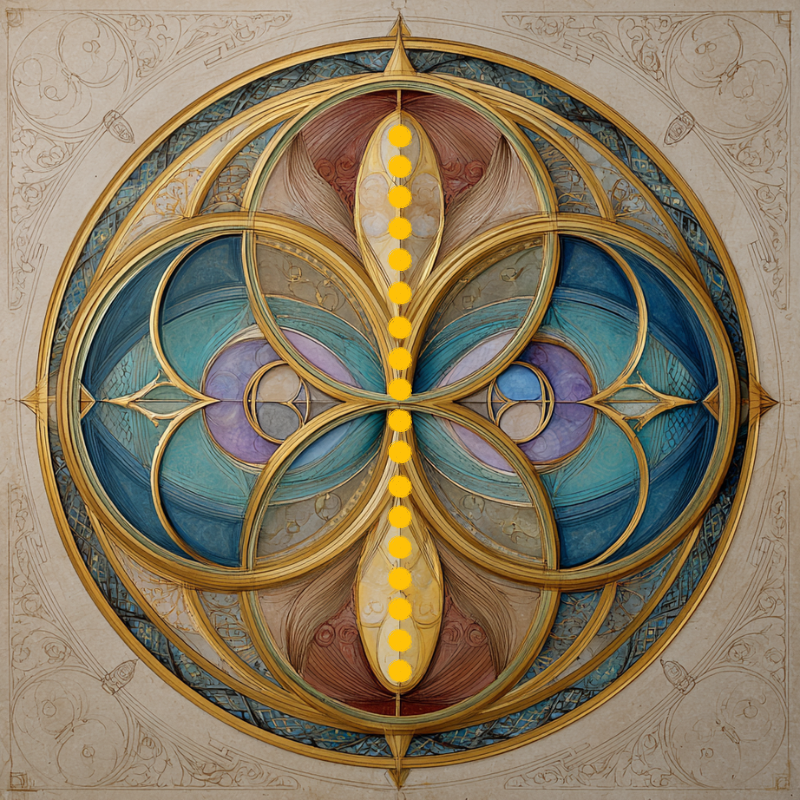
Chakras come from ancient traditions that view the body as more than flesh and bone. From what I’ve learned, chakras are like energy hubs or gateways along the spine. There are usually seven major points (although in my work I use eighteen chakras)—from the base of the spine to the crown of the head—each with a specific energetic focus: survival, creativity, power, love, communication, vision, and connection to the divine.
As I read the Bible, I notice echoes of this system. The language of ascent and descent, oil flowing from head to foot (Psalm 133), rivers of the heart, and lamps that must be kept burning point to a flow of lifeforce throughout the person. The story of Jacob’s Ladder (Genesis 28:12) describes a path connecting earth and heaven, which to me looks like a picture of energy rising through the chakras. When the flow stops or is blocked, there are direct warnings: hardened hearts, stiff necks, closed eyes and ears. These match descriptions given by chakra and energy healers who talk about stagnation or disconnection in energy centers.
How Chakras Connect to the Body and Nervous System
Some people treat chakras as entirely spiritual, but I see them in the body as well. Medical science maps major nerve clusters and endocrine glands along the same line as the chakras: at the base of the spine (root), lower belly (sacral), solar plexus, heart, throat, forehead, and crown. There are connections between an emotional event, like fear, heartbreak, or feeling powerless, and reactions in these spots. For example, a pounding heart in anxiety or a “lump in the throat” when afraid to speak up.
The Bible describes these reactions too. Pharaoh’s “hardened heart,” Saul’s failing eyesight, and the theme of stiff necks in the Old Testament all match descriptions of energy blockages at the chest, head, and neck levels. I find that the words of Scripture often match what I notice in my own body or while working with others in energy balancing sessions. When energy moves smoothly, I feel relaxed, open, and clearheaded. When it’s blocked, I feel tension, confusion, or pain in those specific regions.
Energy Healing: Keeping the System Tuned
Energy healing, whether by prayer, laying on of hands, Reiki, or other methods, is about helping the human system stay in balance. In Christian tradition, there are examples of Jesus and the apostles healing people by touch, word, or presence. Anointing oil (James 5:14), spirit breath (John 20:22), and the practice of blessing others all fit this model. These aren’t magic tricks; they are direct ways to restore energy flow, release blockages, and awaken the body to receive help.
When healing is happening, the goal isn’t only to believe something in your mind. It’s about experiencing a sensory shift at every level: you feel lighter, less tense, more hopeful. I’ve personally seen people go from pain to relief through simple acts of touch, focused intention, or speaking words with real belief and clarity.
How Fast Can Healing Happen?
People often wonder why healing sometimes happens instantly and other times is slow. In my view, it comes down to the type and size of the blockage. Physical pain with no deep emotional cause may lift quickly with prayer or energy balancing. Longterm trauma, selfdoubt, or inherited patterns can take longer. The nervous system stores stress signals, and these must be unwound with patience and repeated efforts. The Bible shows both types of healing: some are described as sudden miracles, while others, like the gradual healing of Naaman or the ten lepers, work over time as trust and process build.
Keeping “in tune” involves regular practice, self-examination, and alignment with truth and love. When I neglect this, old patterns tend to return. When I keep at it, things in my body and life stay lighter and clearer.
Oil, Breath, and the Power of Words
The practical tools for energy healing in both scriptural and holistic traditions include oil, breath, and speech. Oil is often used as a bridge or conductor, physically marking and connecting skin with spirit. Breath is connected to life and spirit itself; spirit means “breath” in Hebrew and Greek (ruach, pneuma). Intentional breathing activates and helps balance the nervous system, it calms me down and helps clear my mind.
Words matter, too. Speaking, singing, or even thinking in certain patterns shifts what happens in the body and energy field. Scripture and tradition are full of examples where a word spoken in love or faith shifts the whole state of a person. In my experience, words spoken with deep intention become almost like a tuning fork for the whole system.
The Goal: Full Integration and Christ Consciousness
Scripture points to a finished state where the system is open, energy flows without blockages, and the person lives with steadiness and compassion. Some call this “Christ Consciousness,” meaning the qualities described in Jesus (stability, love, presence, truth) are active in every part of life. I find that real healing helps bring me closer to this way of being. It’s about integration, not escaping the body or the world, but living as a unified, awake person.
For me, this isn’t some rare achievement for a chosen few, it’s a direction anyone can move toward. When I keep my system aligned, nervous system calm, identity grounded, and compassion active, the state described in the teachings of Jesus becomes felt and practical.
Why Energy Healing Is Really Important
When I try to live out spiritual truths only in my mind, faith becomes dry and disconnected. I’ve found that without energy healing, through touch, breath, sound, or intention, the living message of Scripture feels distant. With a focus on energy healing, teachings become lived reality, the body feels more responsive, and daily life holds a stronger sense of being present and whole. This doesn’t mean giving up belief or study, it means adding another layer that makes the human system complete.
This approach has helped me move scripture from something I read to something I live. I see the chakras as real indicators of where I’m in or out of alignment, and practical energy practices keep bringing me back to wholeness. Friends and clients who’ve joined me in this work often say they finally feel permission to merge spiritual and practical life.
How the Bible, Chakras, and Energy Healing Fit Together
The Bible gives a kind of blueprint for human design: stories and teachings that lay out architecture, function, and purpose. Chakras act as the power grid, describing how energy flows or gets stuck in real, everyday experiences. Energy healing is the hands on practice of clearing, renewing, and upgrading the whole system. When these are joined together, knowledge, energy, and practice, I notice stronger alignment, less confusion, and a deeper experience of faith and wellness. This has let me live with a sense of design and purpose, balancing the spiritual and practical, and restoring myself and others to wholeness.
Questions People Ask About Chakras, the Bible, and Energy Healing
Here are some common questions I get asked, along with how I answer them based on my studies and practice:
Question: Is it okay as a Christian to work with chakras?
Answer: In my view, chakras describe how God designed the body to function with energy and order. Exploring them doesn’t mean stepping outside faith. It’s about learning the full range of how humans are built and how Spirit moves within us.
Question: Does the Bible directly mention chakras?
Answer: The Bible doesn’t use the word “chakra,” but it describes the body in layers and uses stories and symbols that match what chakras represent, energy, flow, light, oil, breath. These overlaps encourage me to look beyond labels and see deeper truths in both traditions.
Question: How can a person get started with energy healing from a Christian perspective?
Answer: I suggest starting with simple practices like “laying on of hands” while praying, using anointing oil, or breath centered meditation with scriptural themes. Ask for guidance and trust your sincerity. Over time, sensitivity and skill grow with practice.
Question: What if someone feels resistance to these ideas?
Answer: I recommend approaching gently. Stay grounded in your own faith and integrity. Read widely, practice prayer for wisdom, and pay attention to what brings peace and clarity in your body and spirit. No single practice works for everyone, and everyone’s adventure is personal.
Using These Ideas in Everyday Life
For people interested in bringing these ideas into practice, I’ve found a few steps helpful. Listen to your body throughout the day: when you feel tension, heavy emotions, or confusion, try a few minutes of deep breathing. Use simple prayers or affirmations with touch, like a hand over your heart or forehead. Read scriptural passages with a focus on where you feel energy move. Slowly, you’ll get a sense of cause and effect, of how spiritual and bodily shifts connect.
Many people also notice benefits from gentle movement, singing or humming, and using oils with intention. See what feels natural and peaceful. I often keep a journal to track changes and growth, noticing which actions help restore balance fastest.
RealWorld Impact of Blending the Bible, Chakras, and Energy Healing
The best proof comes from experience. I’ve seen people move from anxiety to calm, heaviness to hope, and confusion to clarity. My own life runs smoother and holds more meaning when I pay attention to both scriptural truths and the patterns of the body. These practices help families, faith communities, and individuals live with more health, connection, and stability.
- Personal Healing: Simple practices like daily blessing or chakra focused prayers help settle nerves, release old pain, and renew the spirit.
- Relationships: When energy feels clear, it’s easier to listen, forgive, and encourage others. I notice less reaction and more genuine caring.
- Spiritual Growth: Integrating these ideas turns spiritual lessons into embodied habits. Over time, the gap between what I believe and how I act gets smaller.
Frequently Asked Questions
Here are other questions I get from people curious about these topics:
Question: Can these approaches replace traditional medical care?
Answer: I always tell people that energy healing and scriptural practices are supportive, not replacements for proper medical attention. They often work best as complements to professional care, especially for chronic stress or emotional balance. For serious illness, always consult healthcare providers.
Question: Are there risks to energy healing?
Answer: In my experience, gentle, nonforceful energy healing is usually safe, but doing too much too fast can sometimes stir up emotions or leave a person tired. Move at your own pace and notice when you’ve had enough.
Question: Does everyone have the same energy experience?
Answer: Everyone’s system is unique. Some feel tingling or heat, while others notice shifts in emotions, thoughts, or intuition. The goal isn’t dramatic effects, but steady wellbeing and integration over time.
I’ve found that combining the wisdom of Scripture, chakra knowledge, and hands on healing practices helps people live with more peace, strength, and hope. By honoring the architecture (the Bible), the power grid (chakras), and the maintenance tools (energy healing), I keep returning to a sense of purpose and alignment that feels both ancient and personal.
Anyone can explore these connections in their own pace. Careful research, thoughtful prayer, and lived experience go a long way in making these topics less mysterious and more helpful for real life. This way, being a whole human, body, soul, and spirit, moves from being an idea to something I can truly experience every day.
I appreciate how thoughtfully you approached the connection between biblical language and the concept of chakras, especially in the way you describe the body, soul, and spirit as an integrated system rather than separate parts. The parallels you draw between scriptural imagery like breath, oil, and living water and the idea of energy flow invite a deeper kind of reflection that many believers may not have considered before. I also think your emphasis on alignment, nervous system calm, and practical daily habits makes this discussion feel grounded and accessible rather than abstract, which is important when exploring topics like energy healing from a Christian perspective.
Aly, thank you for reading so deeply and receiving the heart of what I was sharing.
For me, the conversation has never been about replacing biblical language with chakra language — it’s about recognizing that Scripture has always spoken in embodied metaphors. Breath. Oil. Fire. Living water. These are not abstract ideas; they are experiential realities. When I speak about chakras, I’m describing how the body registers alignment or misalignment — how peace settles in the nervous system, how conviction tightens the solar plexus, how grief presses on the heart, how truth opens the throat. Body, soul, and spirit are not separate compartments. They are one living ecosystem responding to consciousness, belief, and presence.
I also appreciate that you noticed the practical side. Alignment must translate into lived experience — how we breathe, how we rest, how we regulate stress, how we speak, how we forgive. If energy healing becomes mystical but not embodied, it loses integrity. My goal is always integration: spiritual language that honors Scripture, nervous system science that honors the body, and daily habits that make alignment sustainable rather than theoretical.
I’m grateful you felt that balance. That tells me the bridge is working.
This is such a fascinating topic! I love how you explore the connections between the Bible, chakras, and energy healing, showing that spiritual, physical, and energetic wellness can work together. It really highlights how the body and spirit aren’t separate; they influence and reflect each other.
I’m curious what others think: have you noticed ways your own energy, emotions, or physical state shifts during prayer, meditation, or focused intention? Do you see connections between scripture, your body, and how you feel in daily life?
It would be great to hear different experiences and perspectives on integrating faith with energy awareness and practical healing.
Monica, thank you for such a thoughtful and grounding reflection. You captured the heart of this exploration beautifully—the idea that body, spirit, and energy aren’t separate systems, but different languages describing the same living experience.
What I’ve consistently noticed is that practices like prayer, meditation, or focused intention don’t just stay in the “spiritual” realm. They show up physically—breath deepens, tension shifts, emotions surface or settle, and sometimes there’s a very clear sensation in specific areas of the body. Scripture often mirrors this when it speaks about the heart, the loins, the bowels, or the breath—these aren’t abstract ideas, they’re embodied experiences.
I also appreciate the way you invited others into the conversation. Everyone’s awareness unfolds differently, and hearing how people experience these connections in daily life—whether through calm, clarity, release, or even discomfort—adds depth and honesty to the discussion. Integration isn’t about forcing a framework; it’s about noticing what’s already happening within us.
Beautiful question, and I hope more people feel encouraged to share their lived experiences.
Very good information. I’m really impressed on how you have shown that opposing methodologies can and need to coexist for the well being of the body and mind. Your breakdown of words from the bible that align perfectly with what and how chakras function allowing for full body healing is something that everyone should aim to understand. There is an integration of energy moving in and all around us, you’ve effectively open the doorway for us to start on the path of understanding then easing into the “architecture” and “power grid” without feeling we’re doing something wrong.
Hi Drew, thank you for such a generous and perceptive reflection. I really appreciate how clearly you articulated the heart of what I’m aiming to do—especially your use of the words architecture and power grid. That tells me the integration landed exactly where it was meant to.
You’re right that these approaches don’t need to compete with one another. When scripture, language, breath, and bodily awareness are allowed to coexist, the result is not confusion but coherence. What often feels like “opposing methodologies” are really different entry points into the same living system—one that moves through thought, belief, sensation, and energy all at once.
I’m especially glad you noted the importance of easing into understanding without the fear of “doing something wrong.” That fear has kept many people from listening to their bodies or trusting their direct experience. When the framework feels familiar—through words, symbols, or scripture—it becomes safer to explore how energy actually moves in and around us, rather than resisting it.
Your insight about opening a doorway before explaining the structure is key. Healing isn’t about memorizing the grid first; it’s about feeling that something is already flowing, and then learning how to work with it consciously.
I’m curious—was there a particular word, passage, or concept that stood out to you as especially clarifying when you read the piece?
This article opens an interesting and sensitive discussion by bringing together two frameworks that are often kept separate. I appreciate that it approaches the topic thoughtfully rather than dismissively, acknowledging that many people experience spiritual realities through different languages and symbols.
What stood out to me is the attempt to find resonance rather than forced equivalence. Chakras and biblical teachings arise from different traditions, yet both speak about alignment, intention, inner transformation, and the movement from fear toward love. When handled carefully, those parallels can invite reflection instead of confusion.
At the same time, I think it is important to respect the integrity of each tradition. Symbolic similarities do not necessarily mean doctrinal sameness. For some readers, this kind of comparison can deepen understanding. For others, it may raise concerns about blending concepts that serve different spiritual purposes.
I see value in the conversation when it remains exploratory rather than prescriptive. When readers are encouraged to reflect on their inner life, conscience, and spiritual growth without being told that one system replaces the other, the discussion stays grounded.
Overall, the article invites curiosity and discernment. It reminds us that many people are searching for meaning, healing, and coherence, and that respectful dialogue between traditions can be part of that search when handled with care.
Farid, thank you for such a thoughtful and balanced reflection. I really appreciate how clearly you named the tone of the conversation as much as the content itself. That distinction you made between resonance and forced equivalence is exactly the space I’m trying to hold.
You’re absolutely right that chakras and biblical teachings arise from different cultural, theological, and symbolic worlds. My intention isn’t to collapse those differences or suggest doctrinal sameness, but to notice where human experiences of fear, love, alignment, conscience, and transformation seem to echo across traditions. For some people, those echoes open reflection; for others, discernment is the more important response—and both are valid.
I also agree with you that the work becomes meaningful when it stays exploratory rather than prescriptive. I’m far more interested in inviting people to listen inwardly, notice what supports their spiritual growth, and engage their own conscience than in offering a single interpretive lens that must be adopted.
Your point about integrity really matters to me. Respecting each tradition’s depth while allowing room for dialogue is a delicate balance, and your comment articulates that beautifully.
I’m curious what you think: when different spiritual languages are placed side by side like this, what helps you personally stay grounded rather than feeling that boundaries are being blurred? And do you find certain symbolic frameworks more helpful at particular seasons of inner growth than others?
Thank you again for engaging so generously and thoughtfully.
Hi, this is a really fascinating perspective on human design. I have read a lot about energy healing, but I had never thought to connect the story of Jacob’s Ladder to the concept of energy rising through the chakras. That visual really clicked for me!
I was also intrigued by your mention of using eighteen chakras in your work instead of the standard seven. Do you find that those additional centers help you pinpoint blockages more accurately than the traditional system?
Hi Adrian, thank you for such a thoughtful and engaged reflection. I’m really glad the image of Jacob’s Ladder resonated with you—that upward movement between earth and heaven is a powerful way to understand how awareness, vitality, and consciousness rise and integrate within the human system.
Regarding the eighteen-chakra framework, I’ve found that the additional centers offer much more nuance than the traditional seven alone. The seven-chakra model is an excellent foundation, but it can sometimes be too broad when someone is doing deeper healing work. The expanded system allows me to distinguish where a blockage is actually occurring—whether it’s rooted in survival and ancestry, held in emotional or relational patterning, or happening at higher perceptual or spiritual integration levels. Many experiences that seem like a “heart” or “throat” issue, for example, often resolve more clearly when we can see the intermediate or supporting centers involved.
In practice, this added precision helps both in self-awareness and in healing work, because it reframes blocks not as failures, but as places where energy is asking to be better organized, grounded, or translated into the body. I really appreciate you asking this question—it shows a deep curiosity about how symbolic language, scripture, and embodied healing can speak to one another in very practical ways.
Hello!
I really enjoyed how you connected the chakras and energy work with ideas from the Bible. As a Druid, I’ve always been drawn to energy practices and nature-based spirituality, so it’s interesting to see another perspective on how energy can work in our lives. It makes me think about the ways different traditions approach the same concepts in unique ways.
I’m curious though — when people talk about energy through a biblical lens, how do you decide which practices feel natural to explore and which don’t? And do you think it’s possible to combine that with other energy traditions, like Druidic practices, without it feeling conflicting? This really got me thinking about blending spiritual paths in a meaningful way.
Angela M 🙂
Hi Angela,
Thank you so much for such a thoughtful and beautifully framed comment. I really love how you named that feeling of recognition—that moment when you realize different traditions are often pointing to the same underlying truths, just through different languages and symbols.
For me, approaching energy through a biblical lens isn’t about rigidly adopting or rejecting practices, but about listening for resonance. If a practice brings the body into calm, presence, humility, and alignment—rather than fear, force, or separation—it tends to feel natural to explore. I pay close attention to how the nervous system responds, how grounded I feel afterward, and whether the practice deepens compassion rather than creating inner tension. That discernment feels very biblical to me, even if the form looks different from what people expect.
And yes, I absolutely believe it’s possible to weave biblical symbolism with other energy traditions—Druidic practices included—without conflict. Nature-based spirituality, reverence for cycles, and attunement to the land show up everywhere in scripture once you start reading it energetically rather than literally. When the focus shifts from belief to embodiment, these paths often meet in the same place: awareness, stewardship, and right relationship with self, Earth, and the unseen.
I really appreciate you sharing your perspective here—it adds such a rich layer to the conversation. Thank you for being part of it.
Thanks for this intriguing and respectful look at chakras through a biblical lens. I appreciate how the article explores the idea of energy centers and spiritual awareness in a way that feels grounded rather than speculative. Connecting ancient wisdom with faith perspectives in a way that honors both traditions makes the topic feel accessible to a wider audience.I especially liked how you balanced the spiritual aspects with thoughtful reflection on scripture, without dismissing either side. It’s refreshing to see a discussion that approaches an energetic concept with reverence for faith and personal experience.How do you see this understanding of chakras supporting someone’s spiritual growth in everyday life?
Thank you so much for this thoughtful and generous reflection, Jennifer. I really appreciate how you noticed the intention behind the piece—to approach chakras not as a belief to replace faith, but as a language that helps illuminate how spiritual awareness is lived and embodied.
In everyday life, I see this understanding supporting spiritual growth by helping someone notice where faith is being experienced in the body, not just what is being believed in the mind. Scripture often speaks about the heart, the loins, the breath, the voice, the eyes, and the crown—these aren’t abstract ideas, but lived points of awareness. When chakras are approached as internal centers of attention rather than mystical objects, they become practical tools for self-examination, prayer, and alignment. For example, noticing tension in the throat during moments of silence or truth-telling can invite gentler communication and more honest prayer, while awareness of the heart can deepen compassion and forgiveness in daily interactions.
What feels most important to me is that this framework encourages integration rather than division. It supports spiritual growth by helping someone live their faith more consciously—bringing awareness into emotion, relationship, stress, rest, and decision-making. Instead of separating “spiritual life” from ordinary life, it gently reminds us that growth happens in the body, in real moments, and in the way we respond to the world each day. Thank you again for engaging so deeply with the conversation—it’s reflections like yours that make this exploration meaningful.
As someone who has felt a pull towards both the wisdom of the Bible and the insights of energy healing, I’ve often struggled to see how they fit together. This article didn’t force a synthesis but instead highlighted points of harmony and shared truth. It helped validate my intuitive sense that different spiritual languages can speak of the same profound reality. Thank you for this bridge!
Thank you so much for sharing this, Cian. What you expressed is exactly the space I hoped this article would hold. Rather than trying to force the Bible into an energetic framework—or energy healing into a religious one—I wanted to let both speak in their own languages and allow the points of resonance to reveal themselves naturally.
When we approach spiritual systems with listening instead of conquest, we often discover they are describing the same inner realities through different symbols, metaphors, and practices. The Bible carries a deeply embodied wisdom about breath, anointing, voice, touch, and alignment—while energy healing gives us a modern language for sensing and working with those same lived experiences. When intuition recognizes that harmony, it’s usually because something true is being remembered rather than newly learned.
I really appreciate you naming that struggle and that sense of validation. That “quiet yes” inside—the feeling that different paths are pointing toward the same profound reality—is often the most trustworthy guide of all. Thank you for walking this bridge with me and for adding your voice to the conversation.