By Iris J Chapman
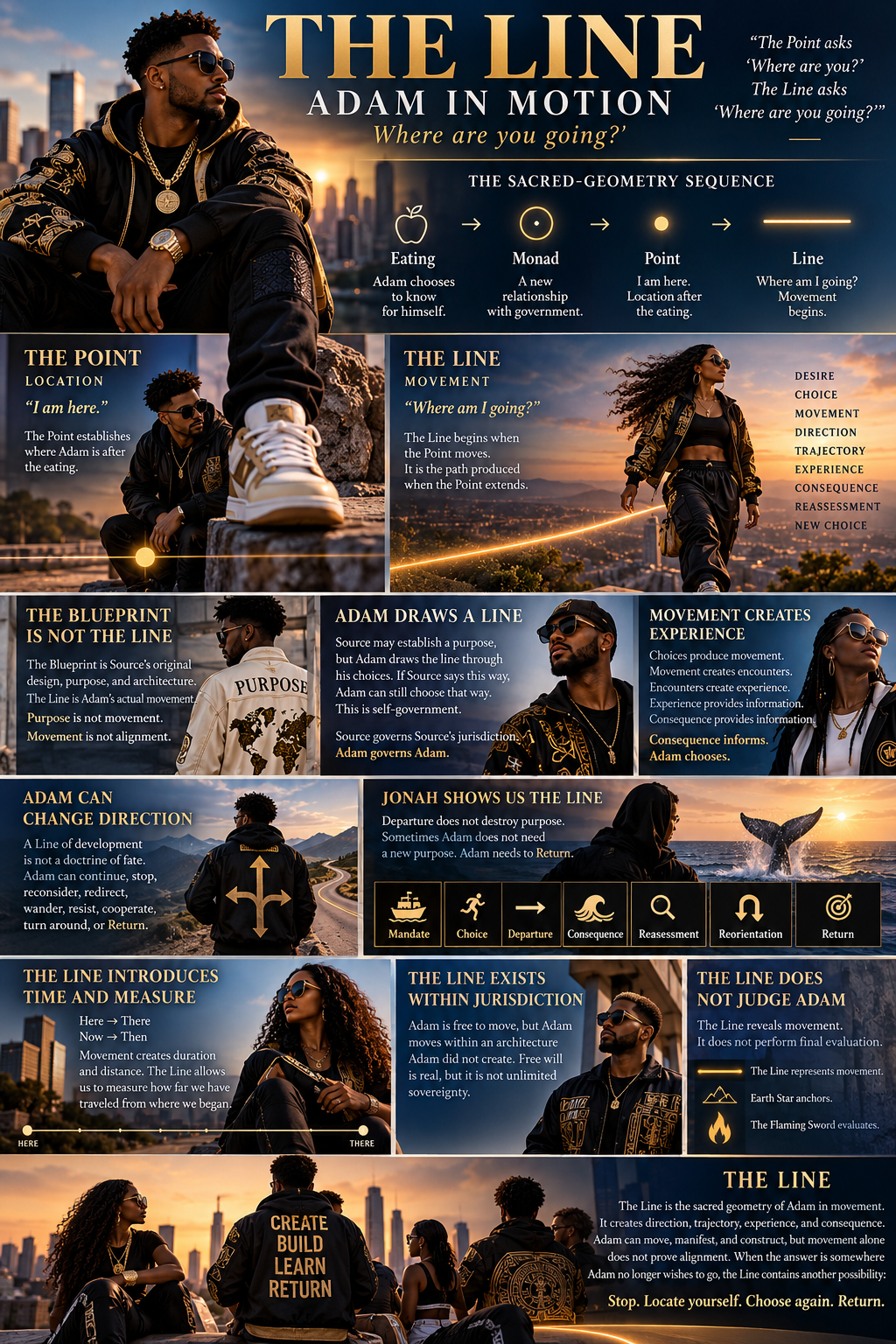
The Point answers one fundamental question: Where are you?
The Line introduces another: Where are you going?
These questions cannot be reversed. Before Adam can determine where he is going, Adam must know where he is. That is why the Line comes after the Point.
The sequence is:
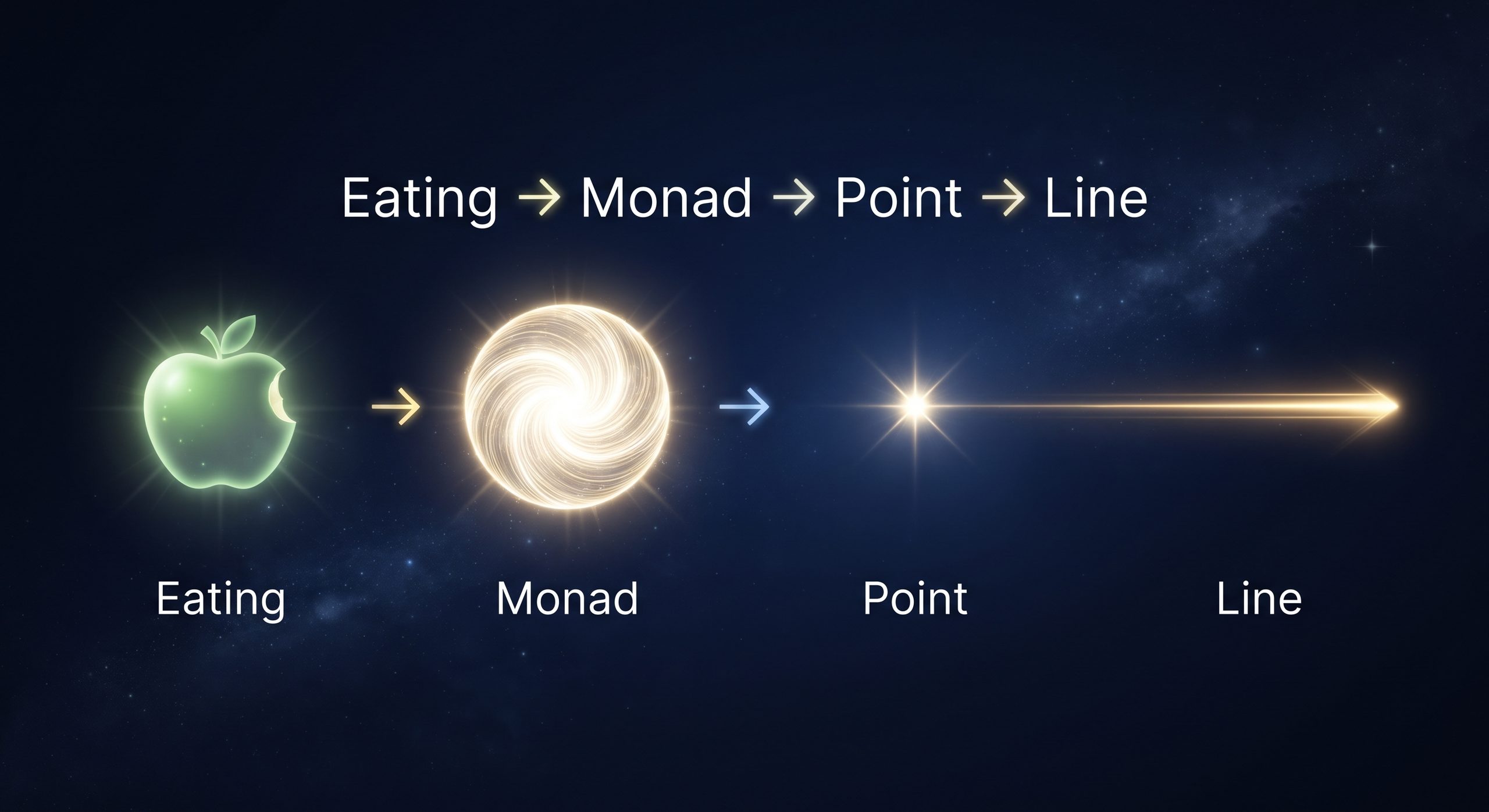
Adam already existed before the eating, capable of living, desiring, choosing, acting, and manifesting. But after the eating, Adam entered a new relationship with government, choosing to know for himself. The Point represents Adam awakened to that responsibility: I am here. The Line begins the moment Adam moves.
The Line Is the Moving Point
In sacred geometry, a line begins with a point. When the point extends from one position toward another, the line appears. This gives us the simplest way to understand the Line: The Line is the path produced when the Point moves.
- At the Point, Adam has a coordinate.
- At the Line, Adam has a direction.
The moment Adam moves, trajectory becomes possible. Adam is no longer merely somewhere; Adam is going somewhere. And that distinction matters enormously.
The Blueprint Versus the Line
We must distinguish the Line from the Blueprint:
- The Blueprint belongs to Source. It concerns the original design, purpose, and architecture established for Adam.
- The Line concerns Adam in movement.
Purpose is not movement, and movement is not alignment. Adam can have a purpose yet move away from it, misunderstand it, resist it, or build something entirely unrelated. Conversely, Adam can stop, reconsider, turn around, and Return.
The existence of a Blueprint does not eliminate Adam’s free will, and Adam’s freedom to move does not eliminate the Blueprint. This distinction allows both Source and Adam to remain within their proper jurisdictions.
Choice Becomes Direction
At the Point, Adam asks Where am I? At the Line, Adam must decide: Where will I go from here? This outlines a developmental sequence:
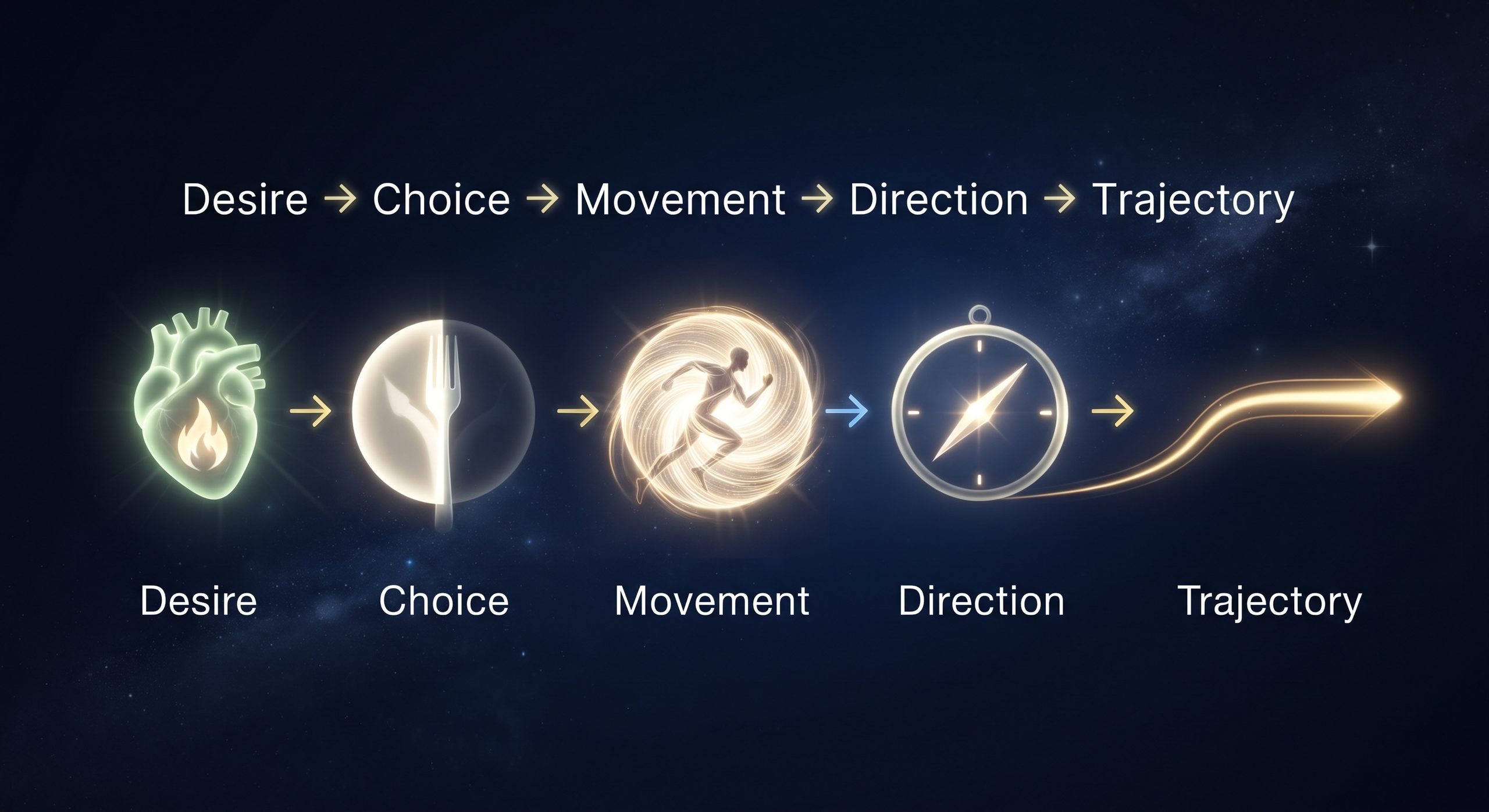
- Desire initiates movement.
- Choice decides what to do with desire.
- Movement turns choice into action.
- Direction takes Adam somewhere.
- Trajectory develops a sustained course through repeated movement.
This is where manifestation becomes critical. Adam can manifest while moving in the wrong direction; a successful manifestation does not automatically prove alignment. Something may be constructed and visible, but it still leaves the Genesis question unanswered: Is it good?
Experience, Consequence, and the Individual Curriculum
The stationary Point identifies location, but movement creates experience. Choices produce movement, movement creates encounters, encounters create experience, and experience provides information.
Crucially, consequence is information, not punishment. If Adam places a hand against something hot, the burn communicates environmental feedback. If Adam destabilizes his Inner Kingdom, the resulting conditions communicate information for interpretation.
This emphasizes that there is no universal human syllabus. The Bible provides mirrors, not standardized curricula. One Adam may spend a lifetime learning what another understood early; the architecture is shared, but the curriculum is individual.
The Rhythm of Development
A Line of development is not a doctrine of fate. Because Adam possesses free will, trajectory is real without becoming destiny. Adam may travel far in one direction, only to stop, re-establish a Point, and choose again.
Jonah illustrates this rhythm perfectly:
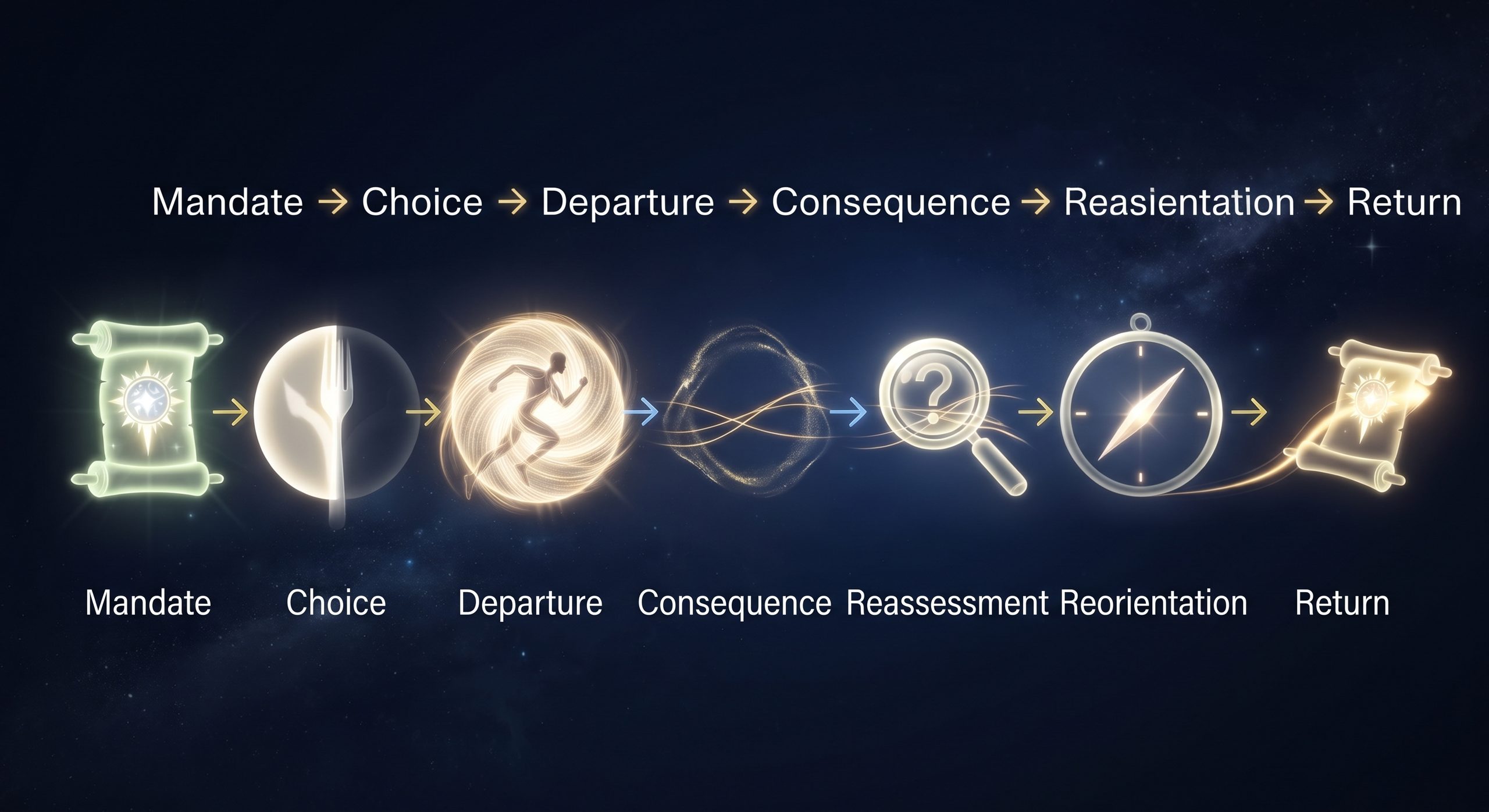
Departure does not necessarily destroy purpose. Sometimes Adam does not need a new mandate; Adam simply needs to Return.
Conclusion: The Geometry of Self-Government
The Line introduces duration and measure—the shift from Here and Now to From here to there. It reveals movement without performing final evaluation, leaving judgment to the Flaming Sword while anchoring responsibility in Adam.
Ultimately, the Point and Line work together in a continuous rhythm:
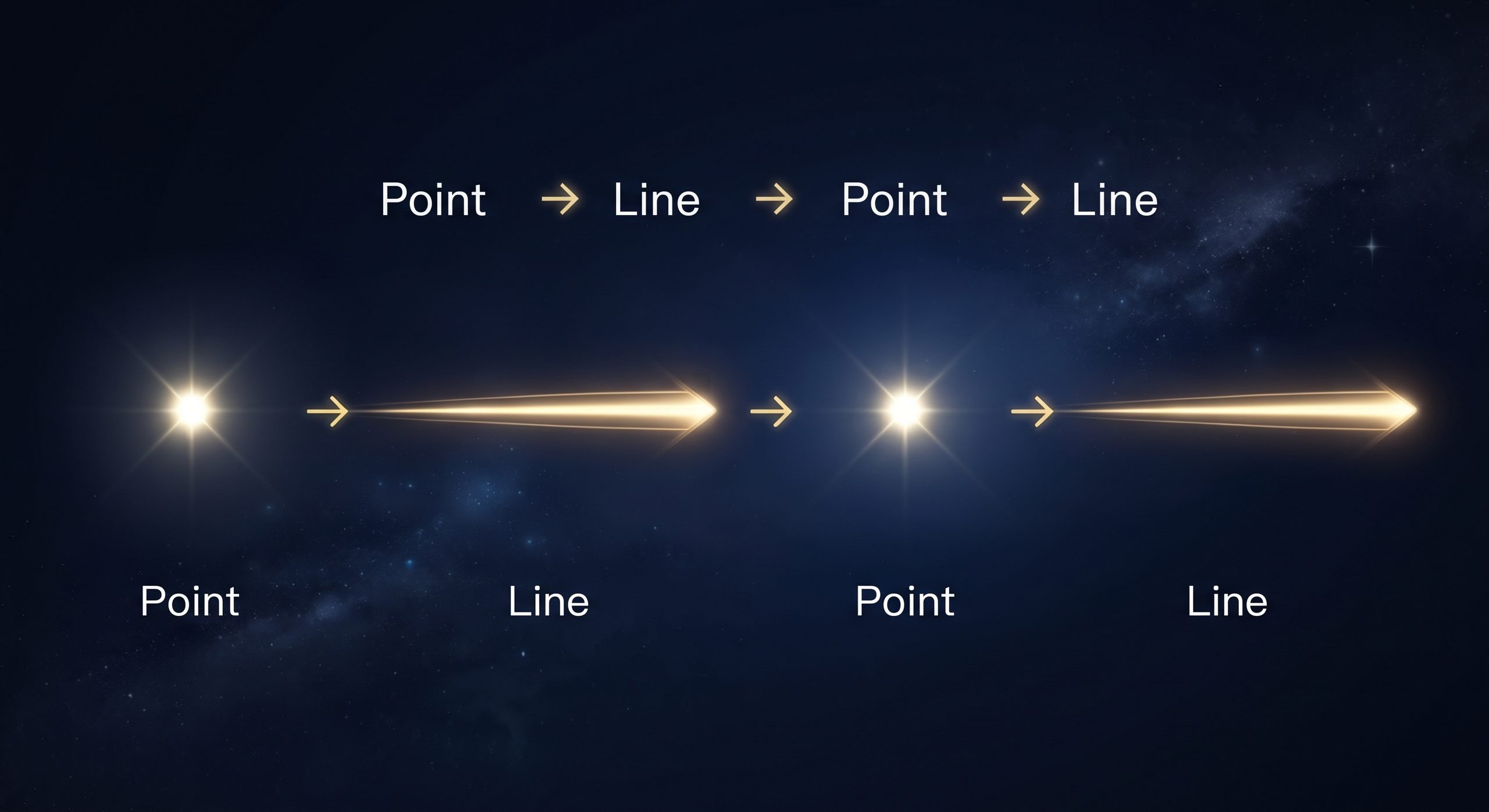
Adam moves through a Divine construct he did not create, carrying a Blueprint he did not author. Yet, through genuine choice, Adam governs his own movement. And when Adam discovers that a trajectory leads somewhere he no longer wishes to go, the Line contains its final, redemptive possibility: Stop, locate yourself, choose again, and Return.