Dried Blue Lotus Flower For Chakra Healing
Dried blue lotus flower has a long history of being used in rituals, teas, and as a natural method to support relaxation. Recently, I have seen a lot more interest in how dried blue lotus flower can play a part in chakra healing and energetic wellness. If you want to explore natural ways for aligning your chakras and finding more balance, learning about this ancient flower may give you practical ideas that easily fit into your daily life.
Why People Choose Dried Blue Lotus Flower for Chakra Healing
Dried blue lotus flower comes from the Nymphaea caerulea plant, recognized in ancient Egypt, India, and other cultures as a symbol of spiritual awakening and peace. Many people now turn to blue lotus flower for its relaxing effects and its reputation for aiding meditation, encouraging vivid dreams, and helping with energetic balance or emotional clarity.
The practice of chakra healing focuses on the body’s seven main energy centers, running from the base of the spine to the top of the head. I find blue lotus lines up most with the crown and third eye chakras, both of which relate to calmness, intuition, and spiritual clarity. Some even use it when working on the throat chakra for better communication and honest self-expression. Interestingly, in traditional ceremonies, blue lotus has often been used in blends to encourage openness, transformation, or gentle release—attributes closely connected to these upper chakras.
Basics of Dried Blue Lotus Flower Preparation
Dried blue lotus flower is typically used in teas, infusions, baths, and incense. Preparing the flower in these ways helps you get the most from both its aroma and traditional benefits. If you want to dig into easy ways to use blue lotus, here are the basics:
- Tea or Infusion: Steep 1 to 2 grams of dried petals in hot water for 10–15 minutes. This warm brew is helpful for setting a calm mood, perfect for quiet moments or meditation.
- Aroma: Burning blue lotus incense or adding petals to simmering potpourri releases a mild, soothing scent. Use this during meditation, yoga, or simple relaxation to bring a sense of calm to your space.
- Baths: Add petals to a warm bath for a spa-like, soothing soak after a long day. Your muscles may feel looser, and your mind gets a break.
Another option is to make a tincture, which involves soaking the petals in alcohol to draw out botanical properties. However, teas and baths remain the easiest and most calming ways to put blue lotus to work for chakra healing at home.
Everyday Uses for Energy Balance
I like to use dried blue lotus flower not just for specific rituals, but also as part of my daily routine. Here are some easy and relaxing ways to work it into your everyday life:
- Morning or evening tea ritual: Sipping blue lotus tea before bed can help me unwind, settle my mind, and mark a clear boundary between the end of the day and restful sleep. I’ll sometimes make it before meditation to help with focus.
- Bath soaks: Tossing a handful of petals in the bath makes tired muscles feel better. The scent rises with the steam, helping you feel more balanced and centered after a busy day. Add Epsom salts or a bit of lavender if you want an even more relaxing bath.
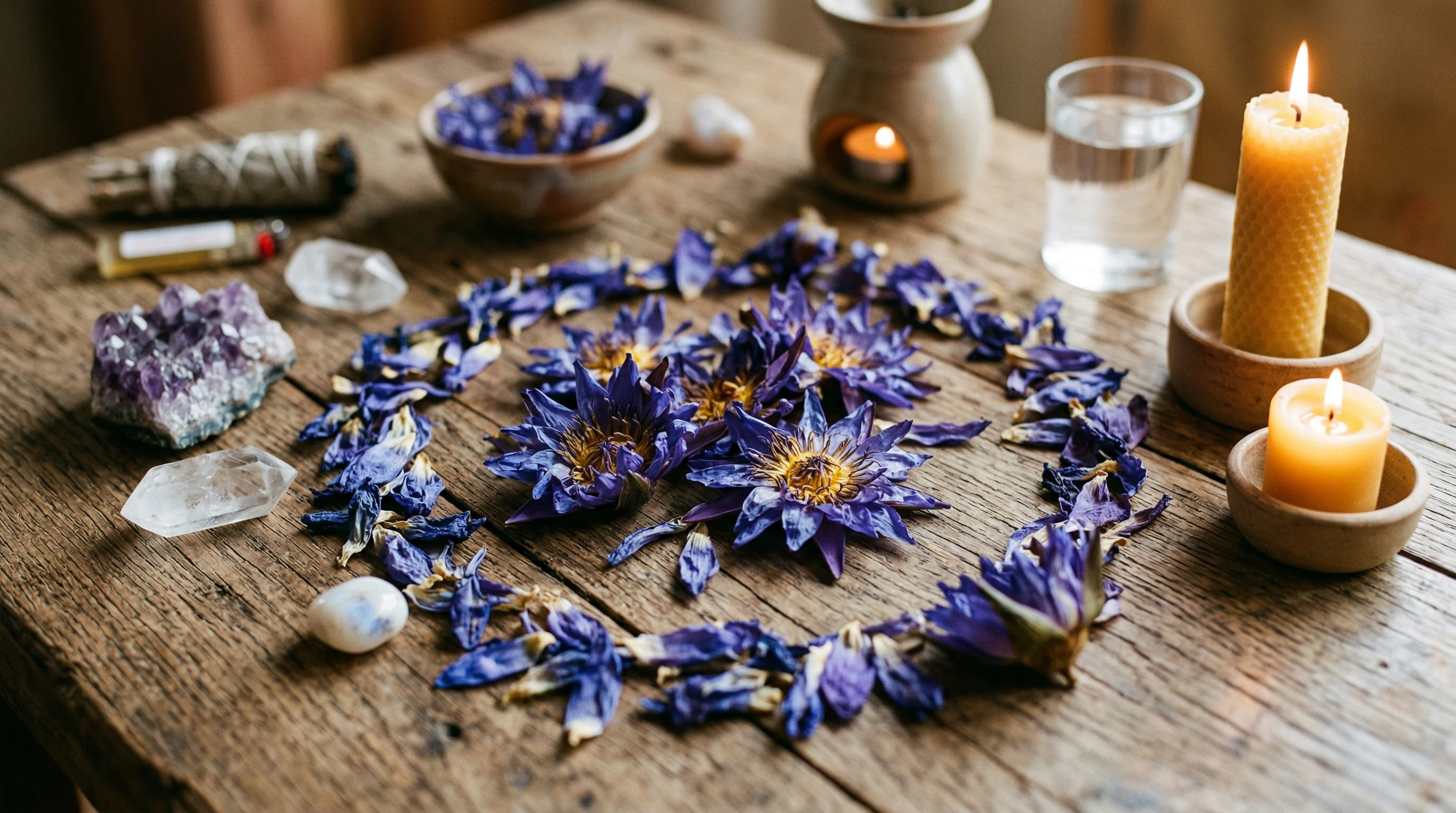
- Room freshening: I like to keep a bowl of dried petals (sometimes with crystals like amethyst or clear quartz) on my desk or in a reading corner. The gentle color and aroma are eye-catching and give the space a touch of calm.
- Pillow sachet: Put dried blue lotus flower in a small pouch and tuck it under your pillow. Some people find this encourages more vivid dreams or deeper, more restful sleep.
You can also blend blue lotus petals with dried lavender, chamomile, or rose for a custom herbal sachet. Finding a combination that smells right to you makes the ritual feel even more personal.
Alchemical Salt Blends
Salt blends using blue lotus flower work well for energetic cleansing and chakra work, especially if you want to step up your regular bath or meditation routine. My favorite way is to mix dried blue lotus flower with Epsom salt and a sprinkle of lavender or rose petals. This versatile salt can be used in baths, foot soaks, or even kept in a small bowl in your meditation area for gentle energy clearing.
For a basic chakra-balancing salt blend that’s easy to put together, follow these steps:
- Mix one cup of Epsom or Himalayan salt with a tablespoon of crushed blue lotus petals.
- Add several drops of essential oils—frankincense and sandalwood are great for crown and third eye focus. Lavender adds a bonus relaxing scent.
- Store this blend in a glass jar with a secure lid. I often add a few amethyst or clear quartz stones to the jar to help raise the energetic effects.
- Sprinkle a small handful in your bath water, use it for foot soaks, or set the salt out in bowls during meditation or yoga practice for gentle energetic cleansing.
You can always mix things up by adjusting the essential oils or adding other dried herbs for different energetic effects. This makes it easy to customize the blend for whatever chakra or mood you want to support on any given day.
Precautions and Important Considerations
While dried blue lotus flower is usually safe for most people, I always suggest talking to a healthcare provider before you try any new botanical if you have health concerns or take medications. Because blue lotus can sometimes bring mild sedative effects, I avoid using it before driving or doing anything that needs a sharp mind.
When buying dried blue lotus, I only buy from trusted herbal shops or sellers who clearly label their products. Good-quality petals should have natural blue or deep purple color and a clean scent. Steer clear of anything that smells musty or looks dull—those petals might be old or poorly stored.
Possible Sensitivities
If you’re new to herbal teas or plant-based relaxation aids, try a small amount the first time to see how your body reacts. Some people feel sleepy or extra relaxed, so start with a lighter dose until you know what works best for you.
Legal Status
Blue lotus flower isn’t available everywhere; its legal status depends on where you live. It’s legal to buy and use in many countries, but some regions place restrictions on its sale or consumption. Always check your local laws before making a purchase to make sure it’s allowed.
Connecting Blue Lotus to Each Chakra
From both tradition and my experience, certain chakras seem to respond most to dried blue lotus flower:
- Crown Chakra (Sahasrara): This chakra deals with spiritual connection. Blue lotus can help you relax fully and reach a peaceful, open state during meditation or spiritual practice.
- Third Eye Chakra (Ajna): The gentle soothing effect of blue lotus is great for clearing mental fog, boosting intuition, and helping clarify your thoughts or dreams.
- Throat Chakra (Vishuddha): On days when I want to step up my honest communication, a warm blue lotus tea helps me reflect before I speak and encourages mindful expression.
Sometimes, people blend blue lotus flower with herbs connected to other chakras (like rose for the heart or ginger for the root), crafting personalized teas or incense blends for targeted energy work or more specific results.
Practical FAQ About Dried Blue Lotus Flower and Chakra Healing
Here are a few common questions I hear about using dried blue lotus flower for chakra healing:
Question: How does blue lotus flower support meditation?
Answer: The mild relaxing effects place me in a calm, focused state. This helps with quieting mental chatter, making it easier to meditate or focus on chakra balancing.
Question: Is blue lotus flower safe for everyone?
Answer: Most people have no issues, but it’s always smart to try a small dose first and pay attention to your body. Don’t use it before driving or operating machinery, and ask a healthcare provider if you are pregnant or take medications.
Question: Where can I buy goodquality dried blue lotus flower?
Answer: I stick to reputable herbal shops or trusted online stores, looking for customer reviews and product details confirming the flower is pure and natural.
Question: Can I combine blue lotus with other herbs for chakra work?
Answer: Yes, blue lotus pairs well with chamomile or lavender for deep relaxation and with herbs like tulsi or mint for a refreshing, customized blend. Always notice how each mix feels for you and let your intuition guide any adjustments.
Best Ways to Store and Care for Dried Blue Lotus Flower
Keep dried blue lotus flower in an airtight glass jar, away from direct sunlight and moisture. This helps keep it fragrant and colorful for several months. Try not to store large amounts at once—smaller quantities stay fresher, and you avoid using faded petals. Label your jar with the purchase date to track freshness.
If you want to give it a longer-lasting scent, consider adding a small piece of dried citrus peel or a few grains of uncooked rice in the jar to absorb humidity. Always close the lid tightly after each use.
Bringing Blue Lotus Flower Into Your Energetic Home Practice
Even if you’re new to chakra healing or herbal wellness, dried blue lotus flower is a gentle, approachable introduction. Using it in teas, baths, or salt blends makes it easy to experiment with natural self-care rituals, whether you’re looking to relax, sleep better, or set the mood for meditation.
In my own routines, these simple practices help balance energy, encourage rest, and add a touch of sacredness to daily life. As with exploring any new herbal remedy, I stay open and observe how each use fits my wellness goals. By staying curious, you might stumble upon new rituals that bring more calm, clarity, or meaning to your energetic routine.