Clove And Chakra Healing Benefits
If you are interested in combining ancient herbal wisdom with modern wellness, checking out the connection between clove and chakra healing can be eye-opening. I’ve found that using clove, both as an herb and as an essential oil, fits naturally into balancing energy centers in the body. In this article, I’ll walk you through how clove has been traditionally used and how it works with the chakras, including its practical benefits and some easy ways to incorporate it into your own wellbeing routine.
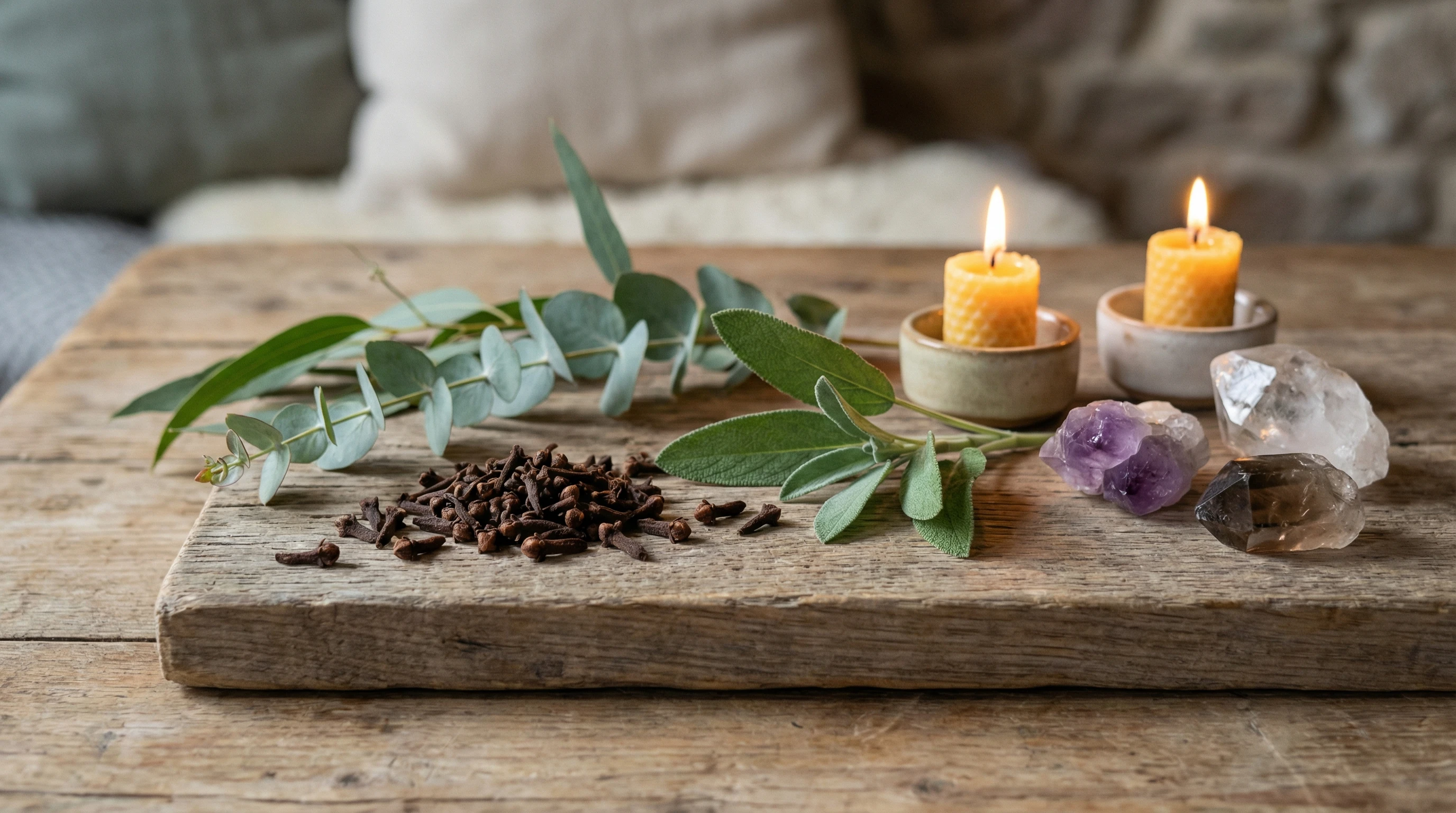
The Basics of Clove and Its Wellness Uses
Clove is a dried flower bud from the Syzygium aromaticum tree. I often use it as a spice in cooking, but its story goes way beyond flavor. For generations, clove has been valued in traditional medicine for its warming scent and health-supporting potential. Essential oil made from clove buds is especially popular for its strong aroma and soothing qualities.
When it comes to wellness, I’ve noticed that clove appears in everything from herbal teas to homemade health remedies. It’s common to find clove in toothache solutions or as a part of natural cleaning blends due to its antibacterial properties. As I see it, clove stands out as an accessible herb for both body and mind support.
Clove contains a compound called eugenol, which is responsible for most of its noticeable effects, such as the numbing feeling you get if you bite into a whole clove. This warming and slightly spicy energy has made clove a favorite in folk healing traditions worldwide.
Understanding Chakras: Energy Centers Explained
The word “chakra” comes from Sanskrit, meaning “wheel.” In my wellness adventure, I’ve found the chakra system to be a helpful way of looking at how physical, mental, and emotional energy moves through the body. There are seven main chakras, starting at the base of the spine and moving up to the crown of the head. Each one has its own focus, color, and qualities.
Here’s a quick overview of the chakras I usually refer to:
- Root chakra: Base of the spine. Associated with grounding and feeling secure.
- Sacral chakra: Lower abdomen. Linked to creativity and emotions.
- Solar plexus chakra: Upper abdomen. Center of confidence and personal power.
- Heart chakra: Middle of chest. Related to love and connection.
- Throat chakra: Throat area. Linked to communication and honesty.
- Third eye chakra: Forehead. Connected to intuition and clarity.
- Crown chakra: Top of the head. Focuses on awareness and connection to the bigger picture.
Many people who practice energy healing, including me, use herbs, essential oils, or meditation to bring these chakras into balance. This is where clove comes in.
How Clove Is Connected to Chakra Healing
I often use clove when working with the body’s energy centers because of its warming property and its ability to move “stuck” energy. In chakra healing practices, clove is most often paired with the root, sacral, and solar plexus chakras.
- Root chakra (Muladhara): Clove is grounding and strong. Its spicy warmth can help when I need to feel secure or supported. Some find that inhaling clove oil or including clove in a root chakra meditation brings a sense of stability and safety.
- Sacral chakra (Svadhisthana): I’ve used clove in blends to stir creative or emotional energy. The warming sensation from clove can help people reconnect to pleasure or passion, especially when emotional energy feels sluggish.
- Solar plexus chakra (Manipura): This area relates to confidence and willpower. Clove’s energizing aroma can spark a sense of motivation and inner strength. Sometimes, just diffusing clove oil gives me a subtle confidence boost when I’m doubting myself.
Clove’s natural properties make it a simple herbal tool to support chakra balance. While it’s not a replacement for medical advice, it’s a gentle and practical way to support well-being.
Simple Ways to Use Clove for Chakra Healing
Adding clove to a chakra-centered routine does not need to be complicated. I often include it in small, everyday rituals. Here are some ideas I find easy to use:
- Diffusing clove oil: Adding a few drops of clove essential oil to a diffuser can fill the space with warmth and focus. I use it during meditation or yoga sessions for grounding energy. This also sets a calming atmosphere for my living space.
- Herbal teas: Drinking spiced tea made with clove, cinnamon, and ginger feels supportive for my digestion and helps me center my thoughts. It’s nice for the solar plexus and root chakras in particular. Sometimes I prepare a batch in advance and enjoy it iced as a cooling, yet warming, treat depending on the season.
- Topical blends: Mixed with a carrier oil, clove can be used as part of a body oil that’s applied gently to the lower back or abdomen; these areas connect to the root and sacral chakras. I always do a patch test first to avoid skin irritation. A gentle massage using this oil can feel comforting after a tough day, connecting physical touch to energetic balance.
- Meditation aid: Placing a bowl of cloves nearby or holding a clove pod connects me to the earthy, spicy aroma, which can sharpen focus during mindfulness or chakra balancing exercises. Even simply inhaling the scent before beginning a meditation helps me settle my thoughts.
Things to Consider Before Using Clove in Chakra Work
While clove is a common spice and generally safe, there are a few things I always keep in mind before adding it to any health or spiritual practice:
- Sensitivity: Clove oil is strong and can cause skin irritation if not diluted well. I always dilute it when applying it to the skin and make sure it does not get near sensitive areas like eyes or mucous membranes.
- Allergies: Anyone with an allergy to cloves or other spices should avoid it completely. I always test for allergies by inhaling the scent first or doing a skin patch test.
- Internal use: Clove oil should not be taken internally unless under the care of a trained herbalist or doctor. Using whole cloves in teas is fine in moderate amounts, but concentrated oil can be dangerous if swallowed.
- Medical issues: If there are existing medical conditions, especially blood disorders or if taking blood thinners, I recommend discussing with a healthcare professional before using clove in any form.
Clove Oil Safety Tips
I prefer to be extra cautious with clove essential oil. Undiluted clove oil can irritate the skin or even burn, so I always mix it well with a carrier oil such as coconut, almond, or jojoba. For children or people with sensitive skin, even more dilution is needed.
Herbal Teas Dosage Tips
When making clove-based teas, I stick to using only one to three whole cloves per cup. Adding more can make the tea too strong and may upset the stomach. I don’t drink clove tea every day—using it once or twice a week works for me.
Advanced Ideas: Combining Clove with Other Chakra Practices
After getting comfortable using clove on its own, mixing it with other supportive techniques can make the experience richer. Here are some ideas I use:
- Aromatherapy blends: I like pairing clove with cinnamon for grounding, or orange oil for an emotionally uplifting effect. These blends can support the lower chakras, especially when used during meditation or journaling sessions. Sometimes, I’ll add a couple of drops of frankincense to create a calming blend for my evening wind-down rituals.
- Crystal work: Placing grounding stones like red jasper or hematite with a dish of cloves connects the energy of both plant and mineral traditions. This combination helps me feel balanced and rooted. Just holding the crystal and clove together during meditation can boost feelings of stability and presence.
- Sound therapy: Listening to root chakra frequencies or drumming while inhaling clove scent creates a sensory experience that encourages groundedness and focus. Occasionally, soft music or singing bowls help intensify the relaxation.
These combinations are not complicated. Mixing plant and energy healing in this way makes wellness routines feel more personalized and intentional for me, allowing me to adjust based on what I’m experiencing each day. Blending these practices encourages creativity in how I support my own well-being.
Chakra Healing with Clove in Everyday Life
I often hear people ask how to know if chakra work with clove is making a difference. For me, the benefits show up in subtle ways. When I use clove in my grounding rituals, I feel calmer and less scattered. Including clove during emotional self-care days helps me feel steadier and more present. If I’m feeling sluggish or tired, the spicy scent helps clear my mind and kickstart motivation.
- Stress management: Diffusing clove or including it in a bath helps lower daily tension. I sometimes add Epsom salts and a couple of cloves to my bathwater for extra relaxation.
- Focus and motivation: Breathing in clove aroma steps up mental clarity, which supports tasks requiring attention or willpower.
- Emotional support: I notice emotional “stuckness” mixes it up when using clove in rituals aimed at the sacral or solar plexus chakras. Over time, I feel more able to move through difficult emotions and reconnect with my creative side.
Frequently Asked Questions
Here are some questions I’ve received from friends, clients, and readers just starting to check out the connection between clove and chakra healing:
How often should I use clove for chakra balancing?
Using clove once or twice a week in wellness routines is usually enough. I listen to my body and skip a week if I notice any irritation or sensitivity.
Is clove safe to use every day?
I prefer not to use clove oil every day due to its strong nature. Using it a couple of times per week feels supportive without becoming overwhelming. Overuse can lead to sensitivity, so moderation is key.
Can I use clove with other herbs or oils?
Yes, blending clove with warming herbs like cinnamon or ginger creates a balanced, supportive effect. Always check for allergies when mixing new combinations. Experimenting with a drop or two of lemongrass or cardamom can also add refreshing notes to blends.
Checking out herbal wellness and chakra healing with clove is a gentle way to support mind and body. I find that being intentional and working at my own pace brings the most benefit. Making clove a part of self-care can support energy, focus, and calm in a single, natural ingredient. Each person’s experience may be unique, so be patient and observe what feels right for you as you work with this ancient plant ally.
Hello!
Thank you for this — I didn’t realize clove had so many potential benefits beyond just being a spice! Your explanation of how it can support different chakras and energy work felt really approachable, not overwhelming. I’m wondering if you find clove works better on its own or when blended with other oils for specific intentions (like grounding vs mental clarity)? Also, do you notice a difference in how people respond to it depending on their energy sensitivity — like is it something most people feel right away or more subtle over time? Thanks again for shedding light on something I’d never given much thought to before!
Angela M 🙂
Hello Angela
Thank you so much for your thoughtful and curious comment — I’m really glad the post helped you see clove as more than just a kitchen spice. It’s one of those oils that tends to surprise people once they meet it in a healing context.
In my experience, clove can work beautifully both on its own and in blends, depending on the intention. On its own, it has a very direct, warming, and activating quality, which I often associate with the root and solar plexus chakras—supporting grounding, inner strength, and courage. When blended, its role shifts a bit:
For grounding: I like pairing clove with oils like vetiver, patchouli, or cedarwood to soften its intensity while anchoring its energy more deeply into the body.For mental clarity or focus: Clove blends well with peppermint, rosemary, or frankincense, where it adds warmth and alertness without feeling scattered.
As for sensitivity, yes — people definitely respond to clove differently. Those who are more energy-sensitive often notice its effects fairly quickly because of its strong, spicy nature. Others experience it more subtly, over time, as a gentle build in confidence, clarity, or emotional steadiness rather than an immediate “aha” moment. That’s why I always suggest starting slowly, especially with clove, and letting your body and energy set the pace.
The key is intention and moderation — a little goes a long way, and clove tends to meet people exactly where they are. I love that you’re approaching this with curiosity instead of pressure; that’s truly the best way to explore energy work.
Thank you again for engaging so thoughtfully, and enjoy discovering what clove reveals for you.
I must say I have never bitten into a clove before and experienced the numbing feeling that you describe. I also didn’t know that overuse can lead to sensitivity, so I guess one shouldn’t make a habit of using it every day.
We cook with it a lot. I wonder if this would also lead to sensitivity over time, as we use it in just about everything we eat?
Thank you for sharing this, Michel — that’s a really thoughtful question.
You’re absolutely right that clove can create a numbing sensation, but that effect is much more noticeable with clove essential oil or highly concentrated clove extracts, not with the small amounts typically used in cooking. In culinary use, clove is diluted by food, heat, and other ingredients, so it’s very unlikely to cause sensitivity for most people, even if you cook with it regularly.
The caution about overuse mainly applies to essential oil use, especially if it’s applied undiluted to the skin or used very frequently in aromatherapy. In that concentrated form, clove can be quite stimulating and warming, which is why moderation and proper dilution are important.
If clove is a staple in your cooking and you’ve never noticed irritation, burning, or lingering numbness, that’s a good sign your body is handling it just fine. As with most things, awareness is key — if sensitivity ever shows up, it’s simply a cue to ease back.
I love that you’re already engaging with clove so intuitively through food. That everyday, grounded relationship with herbs and spices is often the most balanced way to work with them.
This post captures clove as more than a kitchen spice. It shows it as warmth, focus, and movement. The way you connect eugenol to that strong, numbing, spicy character helps the reader understand why clove feels so “active” in the body and in the mind.
I like how you place clove with the lower chakras. Root, sacral, solar plexus. Security, emotion, will. Those are the places where many people get stuck when life gets heavy. When a person feels unsafe, creativity shuts down. When confidence collapses, everything else feels harder. Your use of clove as a warming signal to wake those centers feels natural.
The everyday practices you mention feel real. Diffuser during meditation. A simple tea with cinnamon and ginger. A diluted oil for the lower back or abdomen. Even holding a few cloves during quiet breathing. These are small acts, but small acts are often how we return to ourselves.
I also appreciate the steady caution. Clove oil is strong. Moderation matters. Patch testing matters. That kind of care protects the body while the spirit is searching for balance.
John, thank you for such a thoughtful and grounded reflection. You captured the essence of clove exactly as I experience it—not just as a spice, but as a signal. That active, warming quality you mention is what makes clove so effective for the lower chakras. It doesn’t drift or soothe in a passive way; it engages. It says, wake up, come back into the body, come back into choice.
Your insight about safety, creativity, and confidence is especially important. When the root feels unstable, the sacral tightens. When the solar plexus loses strength, forward motion slows. Clove’s warmth can act like a gentle ignition—nothing forced, just enough heat to remind the system that movement is still possible.
I also love how you framed the small, everyday practices. Holding a few cloves during quiet breathing is such a simple but powerful gesture. Those small acts really are how we re-establish trust with the body, especially when life has been heavy or disorienting. Healing often happens in these subtle returns, not in dramatic moments.
And yes—your appreciation for caution matters. Clove oil teaches discernment as much as it teaches activation. Respecting its strength is part of working with it wisely, honoring both the body’s limits and the spirit’s curiosity.
Thank you for bringing such clarity, presence, and care into the conversation. Your reflection adds real depth to the practice.
Random thought I’ve been sitting with… but did you know lemongrass is said to have healing effects on the chakras? It made me think about how often these older practices show up in modern culture. For example, have you heard of Naruto? Chakra is literally a core tool in the entire story — energy, balance, control. It brought me to another question: when we talk about natural healing, do the cloves that heal include the more obvious ones too… like garlic?
Hi Adrian — that’s not a random thought at all, it’s actually a really insightful one.
You’re absolutely right that these older energetic concepts keep resurfacing in modern culture. Naruto is a great example because it doesn’t present chakra as something mystical and unreachable, but as energy awareness, balance, breath, focus, and control — which is very close to how many traditional healing systems understand it. When something shows up across cultures and generations like that, it’s usually because it’s pointing to a lived human experience, not just symbolism.
And yes — garlic absolutely belongs in that conversation. In natural healing, cloves aren’t limited to the subtle or “gentle” plants. Garlic is considered one of the most protective and activating botanicals across many traditions. Energetically, it’s often linked to the root and solar plexus chakras because of its strong grounding, immune-supporting, and boundary-strengthening qualities. It doesn’t soothe the way lavender or rose might — it clears, fortifies, and pushes stagnation out. That’s still healing, just a more assertive kind.
What I love about your question is that it highlights something important: natural healing isn’t always soft. Sometimes it’s spicy, warming, stimulating, and even uncomfortable — like clove, garlic, or ginger. Those plants work with the body’s life force, circulation, and resilience, which is very much chakra work, even if people don’t always label it that way.
So yes — the obvious ones count too. Sometimes especially the obvious ones
Hello again! I’ve been reading through several of your articles today, and it has been really interesting to see how many different herbs, crystals, and natural tools you connect to chakra and energy work. It makes me wonder how clove fits alongside everything else you’ve shared. Do you find that newcomers get the best results by starting with something simple like diffusing clove, or do most people ease into meditation and ritual work once they understand how the energy is supposed to move?
Hello again! I’m so glad you’ve been exploring the articles — it means a lot to know the connections between herbs, crystals, and chakra work are resonating with you. Everything we use in energy work is really just a different doorway into the same inner alignment, and clove is a beautiful example of that.
Clove carries a strong, warming, protective energy. It stimulates movement where things feel stagnant, strengthens boundaries, and awakens personal power — which is why it often aligns with the Solar Plexus and Root Chakras. Because its energy is so focused and clarifying, it tends to meet people exactly where they are in their spiritual journey.
For newcomers
Yes, starting simply — like diffusing clove or using a very gentle diluted blend — is often the most supportive approach. It lets people feel the energy without overwhelming the senses, and it creates a warm, grounded atmosphere that naturally invites presence.
As people grow more comfortable
Once someone begins to understand how energy flows through the chakras — where it rises, where it gets blocked, and how it settles — clove becomes a powerful ally in deeper practices such as:
grounding meditationsconfidence-building ritualsintention-setting for courage or self-protectionclearing stagnant emotional energy
Most people organically shift into meditation and ritual work once they experience the felt sense of what clove does in their body and energy field. The plant teaches the rhythm.
There’s no “right way” or “right pace” — just the path that feels natural and supportive for the person walking it.
Thank you for your thoughtful question. I love seeing your curiosity deepen as you explore these tools and their energetic language.