
Bible Journaling
Bible journaling adds a creative, personal, and interactive dimension to my time with scripture. My approach to reading the Bible mixes things up when I combine it with journaling. I turn a quiet, passive moment into an active, ongoing conversation with God. When I journal, I write, draw, and sometimes even paint as a way to reflect on what I’m reading and how it applies to my life. This process helps me process, remember, and connect with scripture in a deeper way than just reading alone.
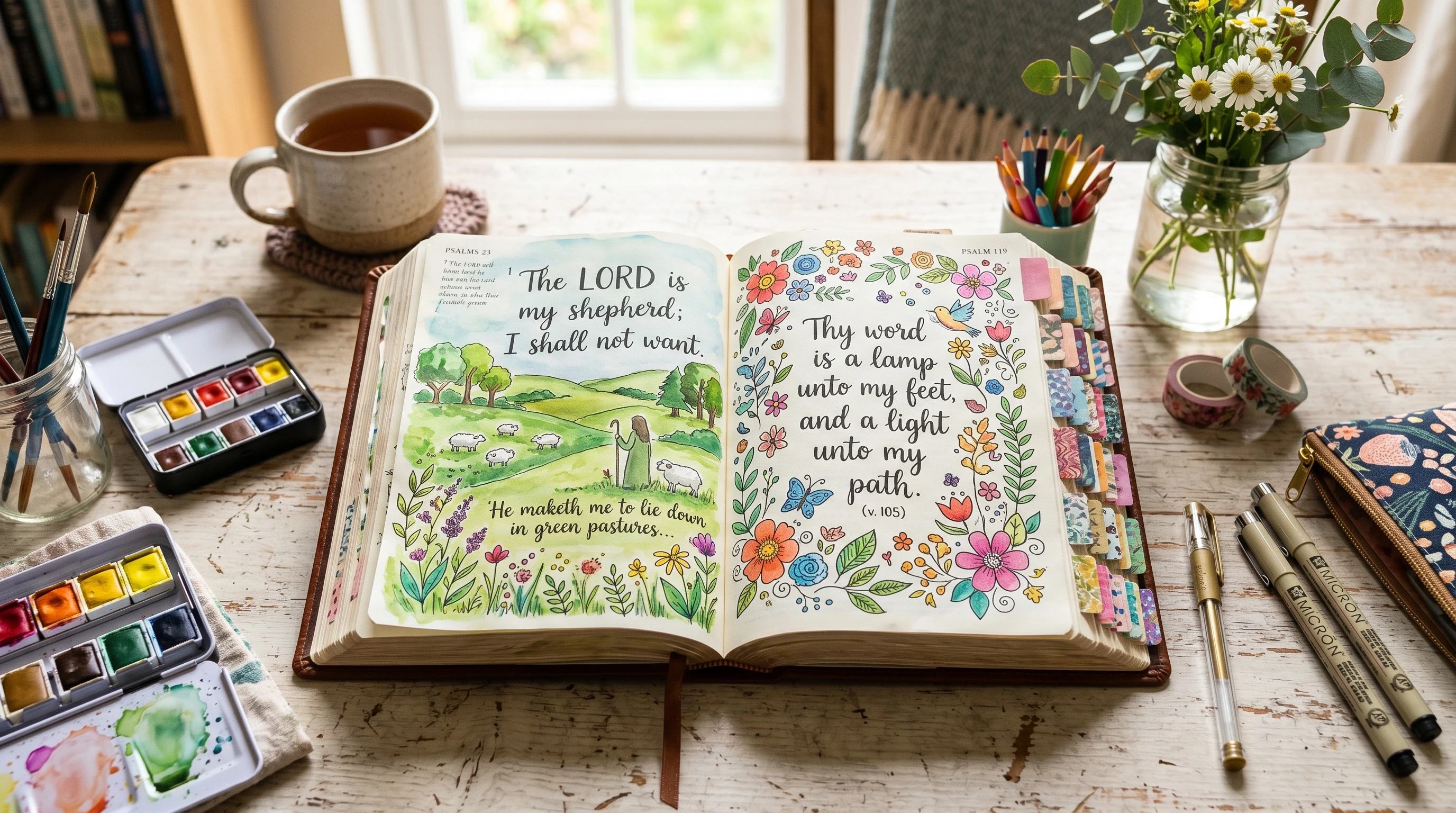
What Bible Journaling Is and Why I Choose It
Bible journaling means taking time with scripture and capturing my reactions through words, colors, and creative elements, either on the pages of my Bible or in a separate notebook. Instead of just reading, I let myself explore the text by writing personal notes, highlighting verses, drawing, or adding decorative touches. My main reason for doing this is to get my mind, heart, and spirit more into it—reading becomes a hands-on, memorable practice.
Several reasons draw me to Bible journaling. I feel more actively involved when I write or draw in response to what I’m reading. The process of responding through art and words helps slow my racing thoughts and lets important ideas sink in. I also use my journaling as a spiritual diary, recording prayers, personal growth, and how I see God working in my life. Sometimes, journaling feels like worship. My creativity, whether simple or artistic, becomes a way to honor God and express gratitude. Over time, my journal fills up with memories and lessons, building a spiritual keepsake that I can return to or share with others.
How Bible Journaling Can Change Your Experience with Scripture
Adding journaling to my Bible reading helps me form a real connection with scripture. I notice more details and ask myself more questions. Writing out prayers or responses makes the experience stick with me far longer. Using colors, drawings, and symbols personalizes the text and brings out themes that stand out in my own adventure. Even when I’m not artistic, the simple act of underlining, making colorful boxes, or jotting quick sketches improves my engagement with the Bible.
After I started journaling, I found that certain verses became anchors for my day or week. Sometimes I notice patterns in my prayers that I might miss otherwise. My favorite part is being able to look back and see how my understanding of a passage has grown as my life changes. When I need encouragement, I flip back to see how God answered previous prayers or brought comfort during tough times.
Popular Bible Journaling Styles
I’ve found that Bible journaling fits many styles and comfort levels. Here are some approaches that people often use:
- Standard Note Taking: Writing observations, thoughts, and meanings in the margins.
- SOAP Method: Writing “Scripture, Observation, Application, Prayer” for each passage.
- Art Journaling: Adding illustrations, colors, or stickers to the pages to highlight themes or emotions.
- Prayer Journaling: Documenting prayers, prayer requests, and answers to prayer next to related passages.
- Verse Mapping: Breaking down words, cross references, and concepts to get a deeper meaning of a specific verse.
Some people keep a separate notebook for journaling, while others use widemargin or interleaved Bibles specifically designed for creative journaling. If drawing or painting isn’t your thing, simple highlighters, sticky notes, or colored pens also work well. My style changes from week to week. Sometimes I go all in with artistic pages, and sometimes I keep it very minimal and focused on notes.
Essential Supplies for Bible Journaling
Getting started with Bible journaling is easy and doesn’t require expensive tools. Over time, I’ve found a set of helpful supplies that make the experience more enjoyable and visually pleasing:
- Journaling Bible: Many Bibles come with widemargins or extra notes pages meant for writing or art. I prefer one with thick, opaque pages to handle pens and light paints.
- Pens: I use fine point, nobleed pens in black and several colors. Micron pens or gel pens are favorites for writing clearly.
- Highlighters: Biblesafe highlighters help me draw attention to standout verses without smudging or bleeding through thin pages.
- Colored Pencils: Great for shading or subtle color effects. These are less likely to bleed than markers or paint.
- Watercolors: If my Bible’s pages are extra thick, I can use watercolors for light washes of color.
- Stickers and Washi Tape: Decorative elements give some flair and help organize or divide sections.
- Sticky Notes: I use them for writing longer reflections or for sections that don’t fit in the margins.
- Ruler: Drawing straight lines helps keep notes neat and tidy.
- Stamps and Ink Pads: These tools add unique shapes or patterns quickly and easily.
I started with just a basic pen and highlighter set, and only later picked up things like colored pencils or washi tape. The key for me is picking supplies that spark creativity but don’t distract from the main goal—connecting with scripture.
How Bible Journaling Fits into My Faith Routine
Bible journaling isn’t just about making beautiful pages. It forms a real part of my ongoing relationship with God. I usually set aside time weekly or a few minutes each day after reading a passage. Sometimes I plan my journaling by picking a specific book or theme, and at other times I respond spontaneously to something that catches my attention while reading.
My routine often looks like this:
- I choose a passage or a reading plan.
- While I read, I pay attention to words, phrases, or ideas that stick out.
- I jot down questions, thoughts, or prayers in the margin or on a sticky note.
- If I feel creative, I illustrate or color relevant parts of the passage.
- I sometimes add a date or a summary, so I know when and why that entry was important.
Even when I’m not feeling creative, just recording my thoughts or prayers makes the scriptures more personal. Journaling encourages me to come back to the same passages again and again, sometimes noticing new lessons or blessings each time. It helps me build a habit of regular scripture engagement, strengthened by creativity and reflection.
Biblical Precedent for Recording Spiritual Rides
While the modern style of Bible journaling is new, the idea of recording God’s words and how He’s working in my life has deep roots in scripture. There are several examples throughout the Bible where people wrote down visions, lessons, or God’s commands for themselves and future generations. Here are some of the passages that inspire my practice:
- Deuteronomy 6:9: God teaches the Israelites to write His words on the doorposts of their homes, reminding people daily to focus on His teachings.
- Habakkuk 2:2: The prophet is told to “Write the vision and make it plain on tablets.” Recording what God shows us is encouraged in scripture.
- The Psalms: Many psalms read like David’s personal spiritual journal. He pours out prayers, fears, triumphs, and praise in poetic form.
- Proverbs 3:3: Wisdom is tied to writing God’s commands on “the tablet of your heart”—journaling helps me do just that in both a literal and spiritual sense.
Seeing how people in biblical times kept records pushes me to keep track of my spiritual walk, prayers, and lessons. These notes become a living testimony to God’s faithfulness in my life.
Making Bible Journaling Your Own
Bible journaling looks different for everyone. When I started, I felt pressure to make every page a work of art, but I quickly learned that my journal belongs to me. I use it for whatever I need in that season. Sometimes elaborate drawings fill the pages, and other times I just scribble prayer lists or jot down a lyric from a worship song that matches what I’m reading.
I give myself permission to experiment, mess up, and even tear out pages if I need a fresh start. I also don’t worry if I skip a few days. Journaling works best when it fits naturally into my spiritual life, not when it adds stress or feels like a chore. If I use a digital Bible app, I also use the notes and highlighting features to accomplish similar goals.
My best advice is to use whatever methods and tools help you listen, learn, and connect with God’s word in an authentic way.
Starter Steps for New Bible Journalers
If you’re thinking about picking up Bible journaling, here are simple steps I found helpful:
- Pick Your Bible or Journal: Choose a Bible with space in the margins, an interleaved edition, or a blank notebook for separate journaling.
- Gather Basic Supplies: You don’t need fancy materials; start with a reliable pen, highlighter, and perhaps a few colored pencils.
- Pick a Reading Plan or Book: Focusing on one book or a short daily reading plan helps me make journaling a routine.
- Pray for Guidance: Ask God to speak to your heart as you read and journal.
- Respond Creatively: Try writing, doodling, coloring, or even making a simple list. There’s no “right” way to do it.
- Stick With It: Like any discipline, it gets easier and more enjoyable the more I practice.
Over time, you’ll find what methods keep you inspired and make journaling a meaningful habit.
Common Challenges and Simple Solutions in Bible Journaling
Getting started or staying consistent with Bible journaling sometimes comes with a few bumps. I’ve experienced and heard about these common hurdles:
- Perfectionism: It’s easy to worry that your notes or art aren’t good enough. I remind myself that these pages are for me, not for anyone else.
- Bleed Through: Some pen inks or paint bleed through thin Bible pages. I like to test out my supplies in the back of my Bible or start with colored pencils and nobleed pens.
- Fear of “Ruining” the Bible: This feeling kept me from writing in my Bible for years. Using a separate notebook at first helped me build confidence.
- Time Pressure: Fitting journaling into a busy schedule is hard. Even short entries or quick prayers count. I try to remember that quality time, not quantity, is what matters.
- Knowing Where to Start: I often use reading plans, devotionals, or even just start with the Psalms when I’m not sure where to begin.
The more I practice, the easier it gets to let go of expectations and enjoy the process. Planning ahead with my favorite supplies and a reading plan makes it much simpler to stick with it long term.
Perfectionism
I struggled in the beginning with worrying about mistakes or making my pages look as good as someone else’s online. Over time, I realized my Bible is for my own spiritual growth. There are no grades or comparisons here. If I make a mistake, I cover it with washi tape, a sticker, or just write over it. The freedom I find by letting go of perfectionism is worth it.
Bleed Through and Supplies
Not all Bibles are made for heavy art, so testing pens or coloring tools on a back page first is helpful. When I notice bleed through, I switch to lighter pencils, use protective paper under the page, or embrace the “well loved” look. There are many guides online for the best Bible safe art supplies.
Keeping Journaling Fresh and Inspirational
Sometimes my journaling routine gets stale. To keep things interesting, I’ll borrow prompts from devotional books, follow social media challenges, or even set up a monthly theme (like “gratitude” or “prayer”). Sharing ideas with friends or in online communities keeps my momentum going and adds fresh inspiration. If you ever feel stuck, try switching things up—change your journaling spot, use a new color, or listen to worship music as you create. These small tweaks give your practice new energy.
Jumping Deeper: Advanced Ideas for Creative Bible Journaling
As I got more comfortable with Bible journaling, I started to check out more advanced and creative ways to use my journal. These ideas can make the experience even more rewarding and help me connect scripture to daily life:
Add Layered Mixed Media: Combining paints, stickers, fabric scraps, and other materials can create standout pages. If the Bible’s paper is thin, I work in a separate sketchbook and attach the finished art with glue or tape.
Lettering Practice: Using creative lettering styles, like calligraphy or bubble letters, makes certain words or verses pop off the page. There are many free guides and templates online for beginners.
Verse Mapping and Word Study: Breaking down a verse by researching words, making connections, and writing out cross references deepens my understanding and helps me see scripture in new ways.
Gratitude and Answered Prayer Logs: Setting up regular pages to record things I’m thankful for or noting when prayers are answered is encouraging, especially during challenging times.
Visual Timelines: Drawing simple timelines of biblical stories or major life events alongside scripture links my story to God’s story.
Trying new approaches keeps journaling interesting and helps me find connections between scripture, life, and creativity. It can be powerful to line up spiritual insights with moments in your own life—sometimes that’s when the most important lessons click.
Examples of How Bible Journaling Has Strengthened My Faith
Keeping a Bible journal has made my faith more grounded and personal. For example, during a tough time, I reread notes and prayers on certain passages and was reminded exactly how God had worked things out before. When I struggled with feeling distant spiritually, flipping through colorful creative pages renewed my excitement for Bible study. On days when I can’t find the words in prayer, my old journal entries give me language and perspective.
I’ve also shared parts of my journal with friends and family, sparking conversations and encouraging others to start similar habits. Seeing my faith ride mapped out in writing and art helps me approach scripture with fresh eyes every time I return to it.
Frequently Asked Questions About Bible Journaling
Here are some questions I hear often from people considering Bible journaling, along with my answers based on personal experience:
Question: Do I need to be an artist to start Bible journaling?
Answer: No, you don’t need any artistic skill! Bible journaling is about your personal adventure, not about making perfect art. Even simple notes or stick figures bring meaning to your pages.
Question: Which Bible translation should I use for journaling?
Answer: Any translation you enjoy reading will work. Widemargin journaling Bibles are available in lots of popular translations. Some people prefer a separate notebook alongside their favorite daily Bible.
Question: What if I don’t want to write in my Bible?
Answer: Using a separate notebook or journal is a great alternative. You can write out passages, prayers, or reflections without marking the Bible itself.
Question: What should I do if I feel stuck or out of ideas?
Answer: Try prompts from devotionals, join an online journaling challenge, or simply rewrite a key verse in your own words. Sometimes a simple approach will open up new creativity.
Bible Journaling in Community: Sharing the Ride
Journaling doesn’t have to be a solo activity. Joining a Bible study group or online community gives me encouragement and new ideas. Sharing journal pages, prayer lists, or even just tips on favorite supplies brings a sense of belonging. Seeing how others connect with scripture builds my motivation and often introduces me to different styles or interpretations I hadn’t thought of before.
I encourage anyone who journals to consider finding a few friends or an online group to share ideas, inspiration, and support. The ride is even better when we learn from one another.
Bible Journaling as a Spiritual Keepsake
Over time, my Bible journal has become a keepsake full of memories, prayers, and spiritual milestones. It tells a story, not just of what I read, but how God was at work during those seasons of my life. Many people pass journaled Bibles on to family members as a way to share their faith and provide encouragement for the future.
Looking through old pages gives me hope and often brings back encouragement when I need it most. I realize that my personal faith adventure is one worth remembering and sharing with others. My journal is a record of small steps of faith that, together, tell a bigger story than I could have written without it.



I really resonated with your point about turning quiet reading into an active conversation with God, because I have found that writing things down completely changes how scripture settles in my heart.
Your reminder that journaling becomes a spiritual keepsake brought to mind Psalm 77:11, where the psalmist talks about remembering the deeds of the Lord and meditating on His works, which feels like exactly what you are describing when you look back at old entries.
I love how you encourage letting go of perfectionism and just letting the pages reflect honest questions and personal growth. When you flip through your journal during a tough season, do you find that certain verses or prayers tend to stand out as anchors, or does it usually surprise you which entries bring the most comfort?
I would love to hear how your own journaling practice has evolved over the years and what keeps you coming back to it.
Thank you so much, Ropata. I really appreciate your thoughtful reflections and for bringing Psalm 77:11 into the conversation. That passage captures the heart of why I continue to journal. It gives me a place to remember, meditate, and gradually recognize patterns that I would have otherwise missed.
One of the things that has surprised me over the years is that the verses that become anchors are not always the ones I expected. Sometimes a passage that seemed ordinary when I first read it suddenly comes alive years later because another part of Scripture illuminates it. That is one of the reasons I never tire of reading the Bible. Each time I return to it, I am able to connect more and more dots. The themes become clearer, the symbolism grows richer, and passages that once seemed unrelated begin to reveal an extraordinary coherence.
My journaling has evolved right alongside that process. In the beginning, I primarily recorded questions and personal reflections. Today, my journals have become a place where I trace recurring biblical patterns, compare passages across the entire canon, and explore how Scripture interprets itself. Looking back through older entries is often humbling because I can literally see my understanding maturing over time. It reminds me that spiritual growth is not usually a single breakthrough but a lifetime of faithful observation, reflection, and allowing God to deepen our understanding one layer at a time.
Thank you again for such an encouraging comment and for sharing part of your own journey. Conversations like this remind me that we all grow richer when we continue seeking, asking questions, and allowing Scripture to reveal itself over time.
This is a thoughtful angle on journaling as a reflective practice, especially when writing and art help slow the mind down and make big ideas feel more personal. I think that part can resonate beyond a single tradition because the act of marking up a text, noting questions, and revisiting old entries is a powerful way to track growth over time.
What stood out to me most was the reminder that the value is in the process, not in making every page look polished. The creative habit itself can become an anchor, whether someone is working through scripture, poetry, philosophy, or any other meaningful text, and that wider perspective makes the practice feel more accessible and human.
Thank you, Aly. I appreciate that you recognized the broader principle behind Bible journaling.
Within the 18-ChakraVerse, Bible journaling is much more than a creative hobby or a way to decorate pages. It is a practice of conscious construction. Every question you write, every insight you record, and every moment of honest reflection becomes evidence of how your inner kingdom is being built.
That is why I encourage people not to chase perfection. A perfectly designed page that never transforms the heart has accomplished very little. A page filled with honest questions, corrections, discoveries, and even crossed-out ideas often tells the story of genuine spiritual growth.
I also appreciate your observation that this practice can extend beyond Scripture. While my work is centered on the Bible as the primary text through which I explore Adam’s journey toward spiritual maturity, the underlying discipline—returning to a text, wrestling with its meaning, and documenting your transformation—is a timeless practice of wisdom.
When you look back months or years later, you are not simply reading old notes. You are witnessing the evolution of your own consciousness. In the language of the 18-ChakraVerse, you are watching Adam move from unconscious construction to conscious construction—one revelation, one decision, and one journal entry at a time.
Thank you for sharing such a thoughtful reflection.
I really understand the fear of “ruining” the Bible by writing directly on the pages. I think that would probably be my biggest hesitation too, especially if the Bible has sentimental value or was a gift from someone. The idea of starting with a separate notebook or sticky notes feels much less stressful and more natural. I also liked the thought of adding dates, because later it can become a kind of spiritual memory record. When you use a separate notebook, how do you keep it connected to the exact Bible passages over time, so you can easily find the meaning again months or years later?
Hi Hanna,
Thank you for your thoughtful question. I think that’s one of the biggest advantages of using a separate notebook—it gives you complete freedom without the fear of marking a treasured Bible.
The way I like to organize mine is by recording the Scripture reference at the top of each entry (for example, Genesis 3:7–10), along with the date and a title that captures the main insight. If several passages relate to the same idea, I’ll list all of those references together on the page. Over time, the notebook becomes less of a diary and more of a personal study companion.
Some people also number their notebook pages and write that page number next to the Bible passage (or on a sticky note), creating a simple cross-reference system. Then, months or even years later, they can open their Bible to that verse and immediately know where to find their reflections.
I also encourage people to revisit older entries from time to time. It’s amazing to see how your understanding grows. Sometimes the passage hasn’t changed at all—but you have. Looking back can become a beautiful reminder of the ways God has been teaching and shaping you over the years.
Thank you again for sharing your thoughts and for being part of the conversation!
Hi,
I like how you explained Bible journaling as something personal. The way you described it as a conversation with God and a record of your spiritual walk makes the whole concept meaningful. It’s encouraging to see how creativity and scripture can work together to deepen understanding. How long it took before journaling started to feel natural and is that differ person to person? I ask this out of curiosity because this really interesting concept for me.
Hi Shafna,
Thank you for such a thoughtful comment. Yes, Bible journaling can take a little time before it feels natural, and I do believe that differs from person to person.
For some people, it feels natural almost right away because they already enjoy writing, drawing, reflecting, or sitting quietly with Scripture. For others, it may feel awkward at first because they are used to reading the Bible in a more structured or traditional way. That is completely okay.
The important thing is not to make journaling feel like a performance. It does not have to be beautiful, perfect, or deeply profound every time. Sometimes it may be a prayer, a question, a verse that stood out, a word you keep hearing in your spirit, or even an honest feeling you are bringing before God.
Over time, it begins to feel more natural because you start recognizing it as a conversation, not an assignment. The journal becomes a place where your walk with God leaves a visible record. I like to journal in the mornings before I do anything. It just feels good to me. Find what works for you.
Thank you again for asking this. It is a beautiful question, and I’m glad the concept is interesting to you.